



Roofers have more website builders to choose from than ever. How do you determine which option is worth your time and won’t get in the way once you start focusing on your SEO?
After working on and reviewing 160+ roofing websites, I’ve seen which platforms make local rankings easier and which ones quietly create roadblocks.
Below are the roofing website builders that perform in real-world conditions when the goal is to generate roofing leads, increase visibility, and drive long-term growth on Google.
Webflow
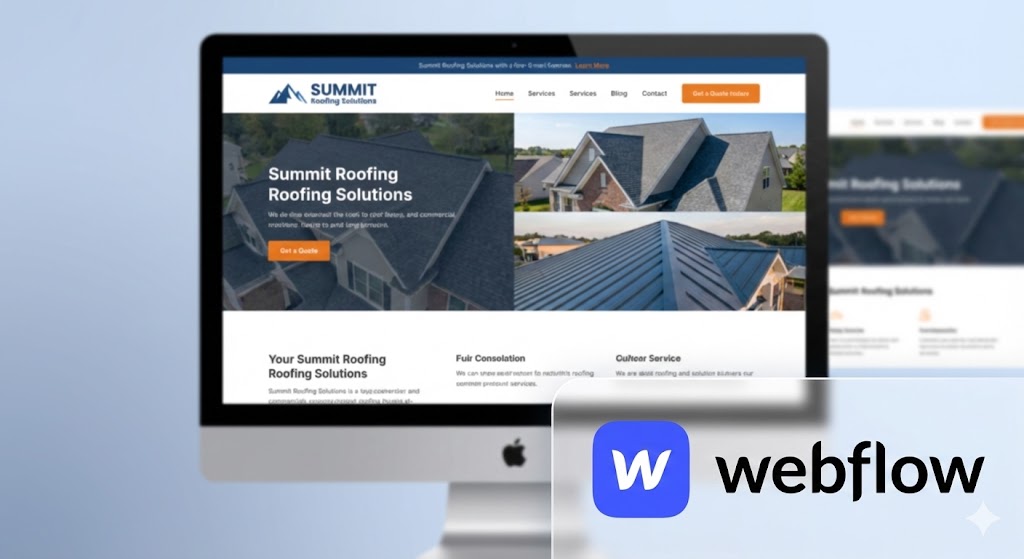
Webflow produces clean code and fast sites, which search engines like.
I’ve seen Webflow sites perform very well in local SEO when they’re structured properly. The issue is usability: editing content, adding pages, or making SEO changes requires more effort than in WordPress.
Still, our roofing SEO agency has used Webflow a lot for our roofing clients. When changes are design-focused, Webflow often feels smoother and faster due to its visual, no-code environment and built-in CMS.
WordPress

I recommend WordPress when SEO is a priority.
It gives full control over page titles, URLs, internal linking, schema, speed optimization, and content structure. That matters when you’re building service pages or city pages, or when you're expanding into multiple locations. It can grow with you as you scale your roofing business.
The downside is the setup: hosting, themes, updates, and plugins must be managed correctly. When that’s done right, WordPress scales. When it’s done poorly, it becomes messy fast.
Squarespace
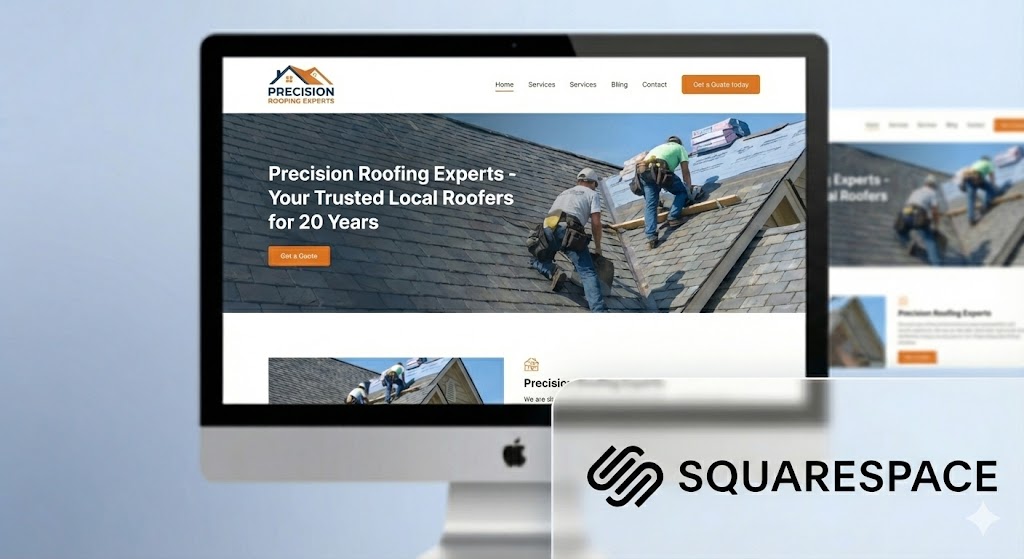
Squarespace is good at one thing: getting a clean, professional-looking site live quickly.
For single-location roofers in less competitive areas, it can work. You can rank locally, but SEO flexibility is limited. Service-area expansion, aggressive internal linking, and advanced optimization eventually hit a ceiling.
Wix
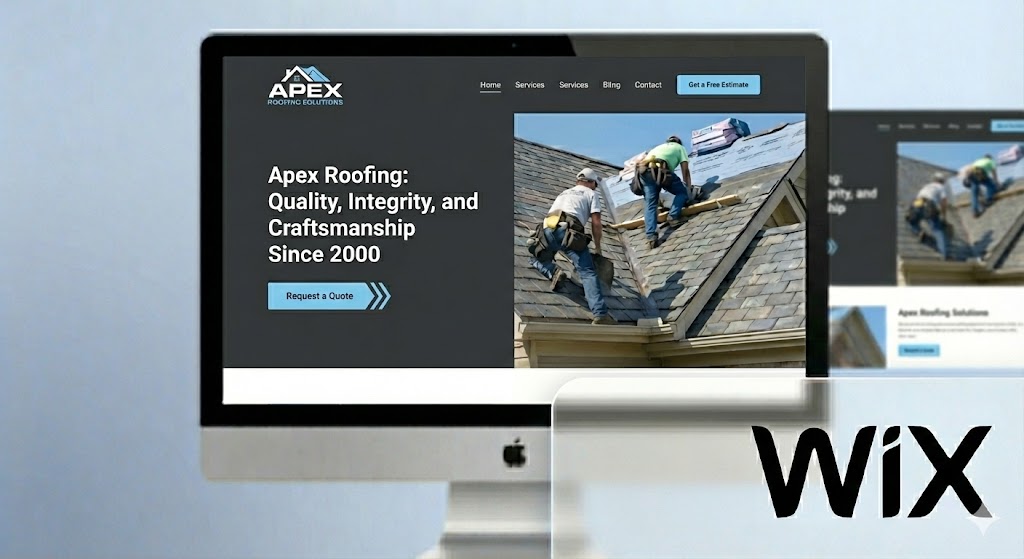
Wix is easy. That’s its biggest strength.
You can launch fast, edit without frustration, and avoid technical headaches. SEO has improved, but limitations persist in competitive markets, especially when scaling service or location pages.
So, I’d say it’s fine for starting out. Most roofers who get serious about rankings eventually move off it.
Weebly
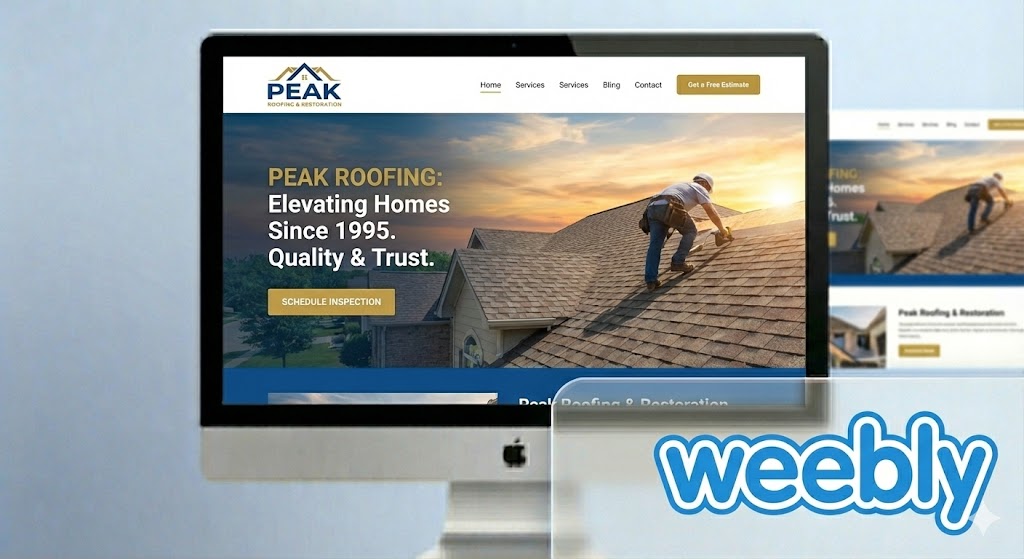
Weebly is the cheapest and simplest option. It’s fine if the goal is simply to have something online. SEO control is minimal, and growth is limited. I’ve rarely seen Weebly sites compete in search once other roofers invest properly.
I still included them on this list of roofing website builders because each feature can only be valued relative to the competitiveness of the area you serve, your competitors' practices, and other factors. So, don’t cross them out yet!
How to Choose the Right Roofing Website Builders
Now that you know the best roofing website builders, let’s understand how you can choose the best for your needs among them.
When reviewing website builders for roofing companies, I don’t prioritize features. I look at whether a builder makes your local roofing SEO easier or harder.
I’ve seen good-looking roofing sites fail because the builder locked down page titles, URLs, or service-area pages. I’ve also seen simple sites rank well because the platform didn’t get in the way. Below is what matters.
SEO & Local Control
If I can’t edit page titles, headings, URLs, and meta descriptions, I won’t use the builder.
Roofing SEO is location-driven. If I can’t set a title like “Roof repair in Dallas, TX,” the builder is already a problem. I’ve seen roofers stuck with auto-generated titles like “Home” or “Services” and wonder why they don’t rank. Explore our roofing SEO guide for more context on this topic.
Mobile Speed
Most roofing searches happen on phones. Slow mobile sites immediately lose leads, while mobile-first websites generate 50%+ more local leads for roofers.
Before committing to any builder, I test it on a phone. If it loads slowly, feels laggy, or makes buttons hard to tap, I move on.
Ease of Editing
You don’t want to waste your precious time on managing a roofing website. You want to update it and get back to serving clients.
If changing a photo, phone number, or service area takes more than a few minutes, the builder becomes a liability. The best platforms feel obvious. The bad ones require relearning the interface every time.
Real Cost
The monthly price is rarely the real cost.
Most roofing website builders advertise low entry pricing, then charge extra for templates, plugins, forms, or basic SEO controls. Others bundle hosting, security, and domains into one predictable cost. Always look at what you’ll pay six months in.
Roofing Tool Integrations
Your website should pass leads directly into your roofing CRM.
Builders that integrate with tools like JobNimbus or AccuLynx save time and reduce lead loss. Builders without solid integrations create manual work and missed follow-ups. I’ve seen both, and the difference adds up fast.
Pages To Make Sure Every Roofing Site Can Support
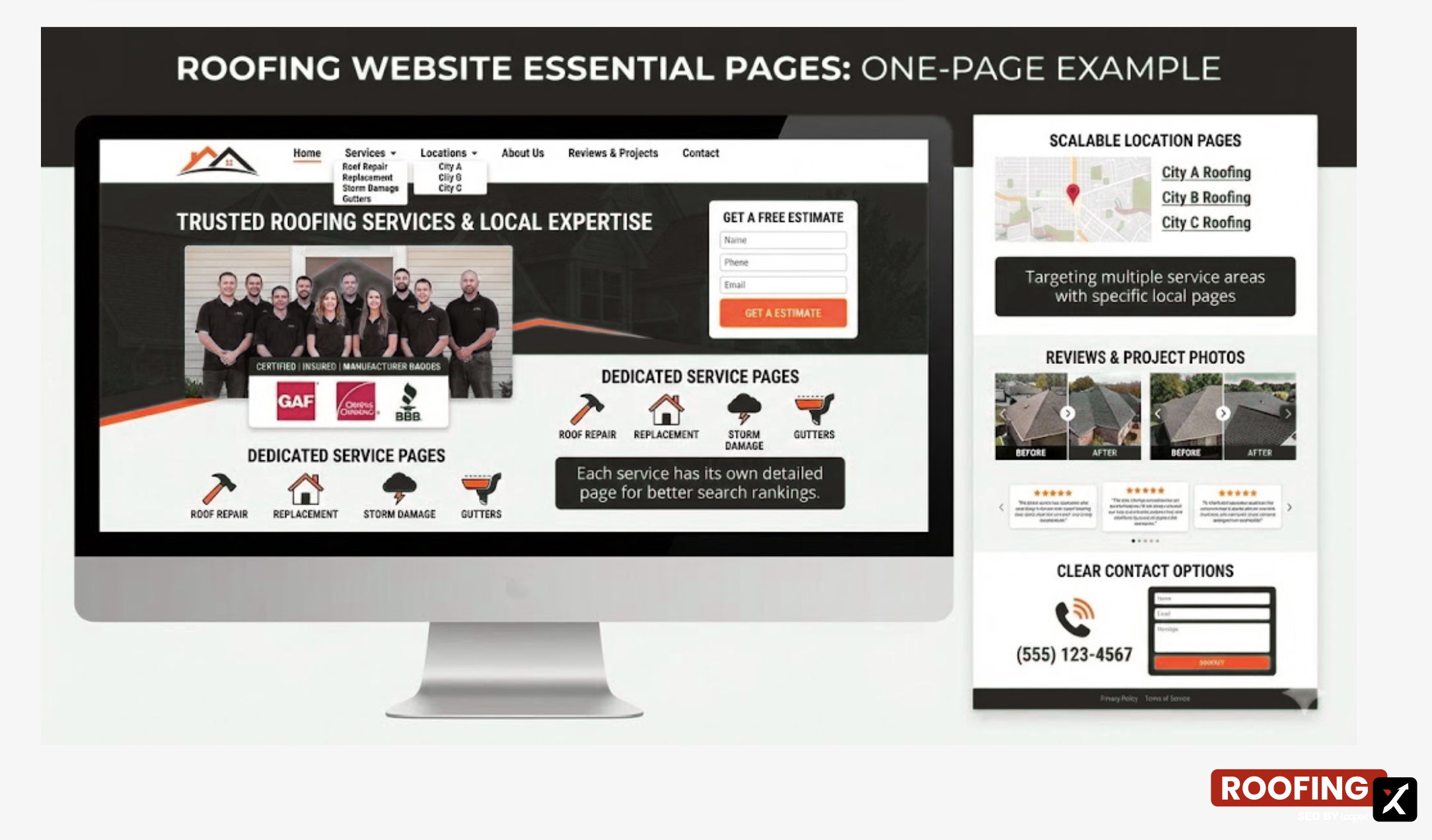
I don’t obsess over page checklists, but I care whether the roofing website builders you choose will let you create the pages that drive rankings and calls.
In addition to the points I mentioned earlier, I’ll also share a brief note on page options, features, and other must-haves.
- Dedicated Service Pages: Each core service needs its own page (roof repair, replacement, storm damage, gutters). Builders that force everything into a single generic “Services” page usually underperform because they don’t align with how homeowners search.
- Scalable Location Pages: If you serve multiple cities, the builder must support clean URLs and numerous location pages. I’ve seen roofers move from page 2 to page 1 by adding well-structured pages for their top service areas.
- Clear Contact Options on Every Page: Short forms convert best. Phone numbers must be clickable on mobile. I still audit roofing sites where the number is in plain text; that’s a lost lead every day. I still audit roofing sites where the number is in plain text; that’s a lost lead every day.
- Room for Reviews and Project Photos: Before-and-after photos and real testimonials build trust fast. Builders need flexible sections to showcase proof, not just design elements.
- A Strong About Page with Trust Signals: Roofing is a high-ticket decision. Certifications, insurance information, team photos, and manufacturer badges need to be presented clearly. If a builder makes this awkward, that’s a red flag.
If a platform makes this hard or impossible, I won’t use it.
How the Builder You Choose Affects Roofing SEO
Don’t look at builders as “SEO-friendly” or “not SEO-friendly.” Assess whether they reduce friction or create it once SEO becomes serious. Here’s where builders make the biggest difference.
Local SEO & Google Business Profile Alignment
Your website and Google Business Profile need to reinforce each other.
Inconsistent business name, address, or phone number (NAP) weakens local signals and hurts rankings. Some builders make NAP information easy to control sitewide. Others lock it into templates or spread it across the site, making consistency harder to maintain.
If a builder doesn’t allow clean control of NAP data, it creates avoidable SEO issues.
Schema Support (or Lack of It)
Schema helps Google understand what you do, where you work, and what services you offer.
Some builders support LocalBusiness and service schema natively. Others rely on plugins or manual code. Builders that make the schema hard to implement limit ranking potential in competitive markets.
Content & Blog Management
Roofing SEO isn’t just service pages. It also answers the real roofing questions homeowners are searching for.
Roofers generate leads by answering those questions with content such as pricing guides, insurance FAQs, and storm-related searches. That only works if the builder makes publishing and updating blog content easy.
If blogging feels clunky, it won’t happen. Builders that discourage content creation quietly limit long-term SEO growth. You need a proper blog backend to support creative roofing blog ideas!
Roofing Website Builders vs Professional Roofing Web Design Services
You can absolutely build or manage any of these builders on your own.
That said, my team works with roofing websites every day. We’ve built, rebuilt, migrated, and optimized sites on all the roofing website builders mentioned, often resolving SEO issues caused by improper setup. That includes:
- Redesigning sites that aren’t converting
- Migrating sites without losing rankings
- Rebuilding on a better platform when a builder hits its limits
- Structuring pages, content, and internal links specifically for roofing SEO
We don’t treat the website as a design project. We treat it as a ranking and lead-generation system. Design, content, and SEO are planned together so the site performs once it’s live.
If you want to handle it yourself, this guide will help you choose the right builder. You can also check out top roofing website examples for inspiration.
If you want it done correctly from day one, or fixed after things didn’t work, we already know how to make these platforms perform for roofing companies.
Turn Your Roofing Website Into a Lead Generation Machine
The roofing website builders are just the foundation. What truly matters is optimizing your site for local search, building trust with potential customers, and making it easy for homeowners to contact you.
If you want expert help, contact us. Let’s discuss your goals and help you reach them!
FAQs
Can I move my roofing website to a different builder later?
Yes, but migrations can be tricky and may temporarily affect your search rankings. Choosing carefully from the start saves headaches down the road. If you are migrating now, our roofing SEO agency can help you do so without losing rankings!
How long does it take to build a roofing company website?
Most roofers can launch a basic site in a few days using a builder. Adding fully optimized content to each service and location page typically takes a few weeks of focused work.
Do I need technical skills to use a roofing website builder?
No. Modern builders use drag-and-drop editors designed for people without coding experience. If you can send an email, you can build a basic site. Still, basic SEO and web design knowledge will be very helpful. So, if you don’t have it, you can trust experienced roofing SEO companies instead.
Which website builder works best for multi-location roofing companies?
WordPress offers the most flexibility for creating and managing multiple location pages with unique local SEO. It's the go-to choice for roofers serving several cities.
Can I add online estimates or payment features to my roofing site?
Yes. Most builders support third-party integrations for online estimates, scheduling, and payment processing through apps or embed codes. Check compatibility before you commit to a builder.


.webp)