




Most roofing companies get stuck because the business is inconsistent: leads spike and disappear, margins vary by job type, reviews come in randomly, and too much still runs through the owner. Scaling a roofing business means fixing that inconsistency so demand, operations, and profit stay aligned.
In this guide, we walk through the steps roofers use to build predictable leads, structured operations, and a customer experience that supports growth. The framework is based on real patterns we’ve seen across 120+ roofing companies and how homeowners choose who to call.
1. Lock in Your Niche and Local Positioning
Before you think about growth, make sure your business knows what it’s built to do. That starts with a basic, non-fancy business plan.
If you don’t have one, write it down. There are plenty of templates online, but the core is simple. You should be able to answer a few questions clearly:
- What type of roofing work do you focus on?
- Who do you do it for?
- Where do you want most of your jobs to come from?
If you already have a business plan, review it and be honest about your positioning. Highlight what you want to be known for and remove anything that dilutes that message.
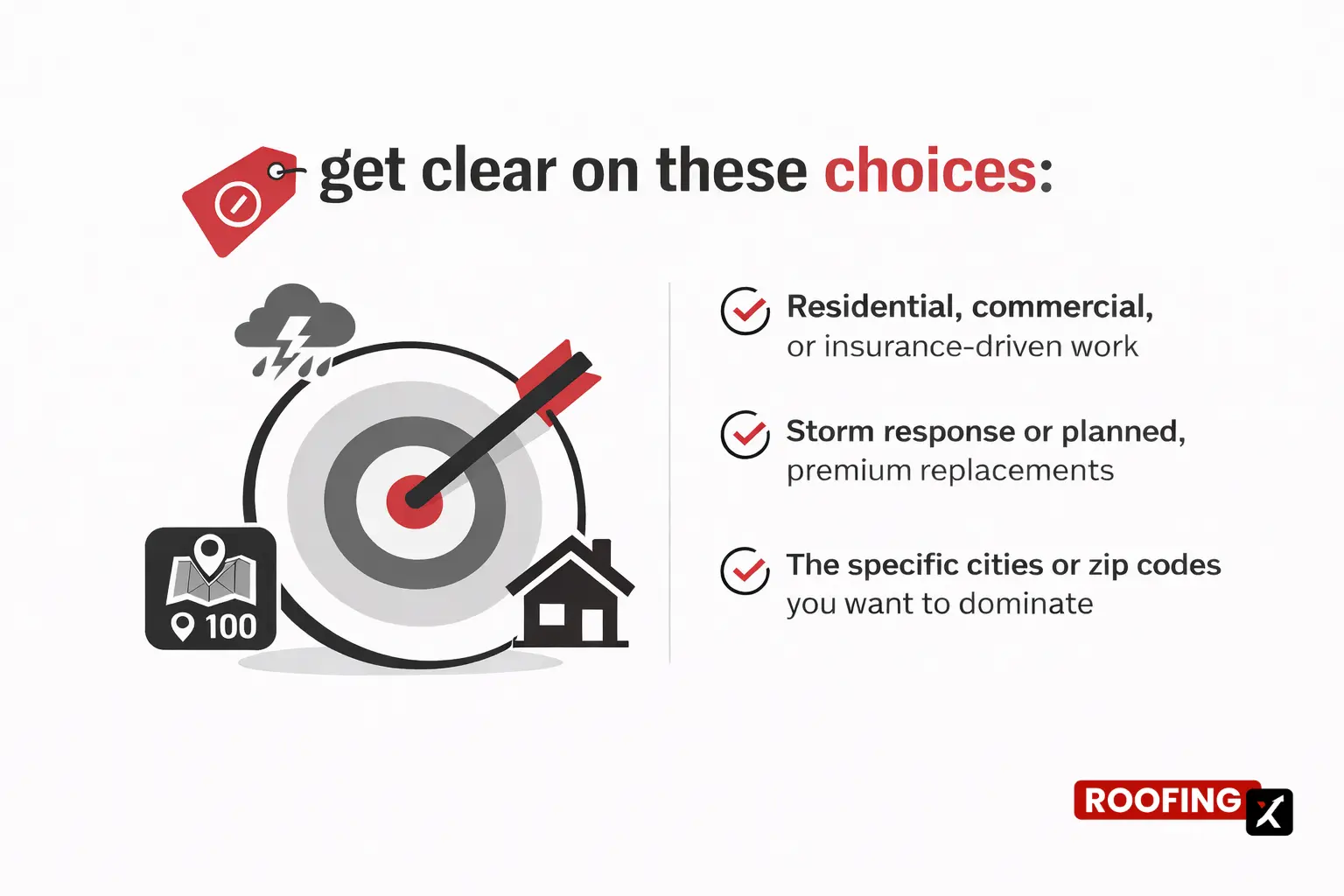
At a minimum, get clear on these choices:
- Residential, commercial, or insurance-driven work
- Storm response or planned, premium replacements
- The specific cities or zip codes you want to dominate
Trying to be everything to everyone slows growth and makes marketing harder. Clear positioning does the opposite. It sharpens your message, improves margins, and makes your company easier for homeowners to understand.
2. Build a Lead Engine You Can Control
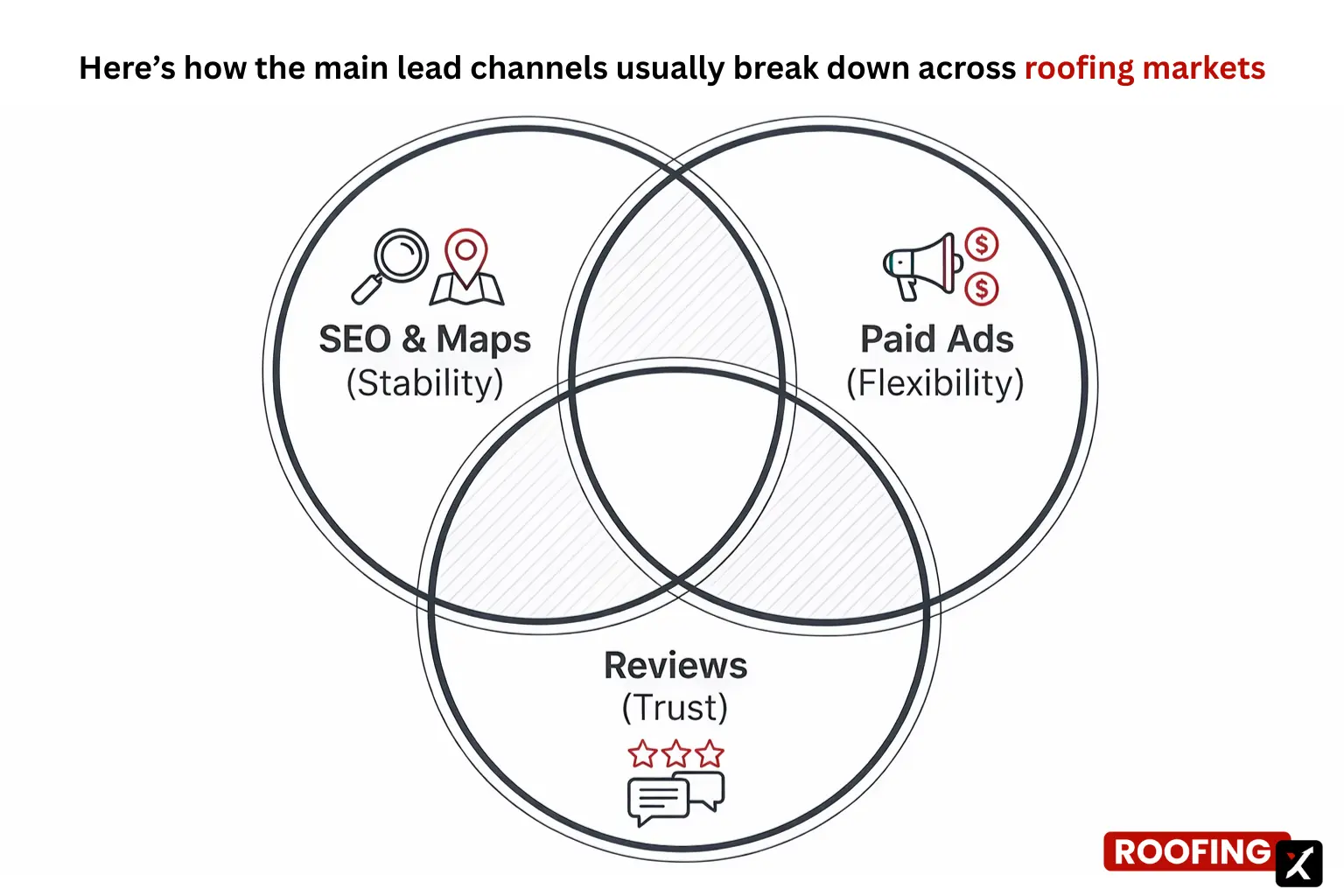
Once your positioning is clear, the next step is a demand you can rely on. You don’t really want to get more calls at any cost. You want to control the lead engine. That usually means combining a few channels, each with a clear role:
- Local SEO and Google Maps for steady, long-term demand from homeowners already searching
- Paid ads for short-term volume and filling gaps during slower periods
- Reviews and referrals built into every completed job (that’s called reputation management)
And there you have it, the holy trinity of roofing lead generation:
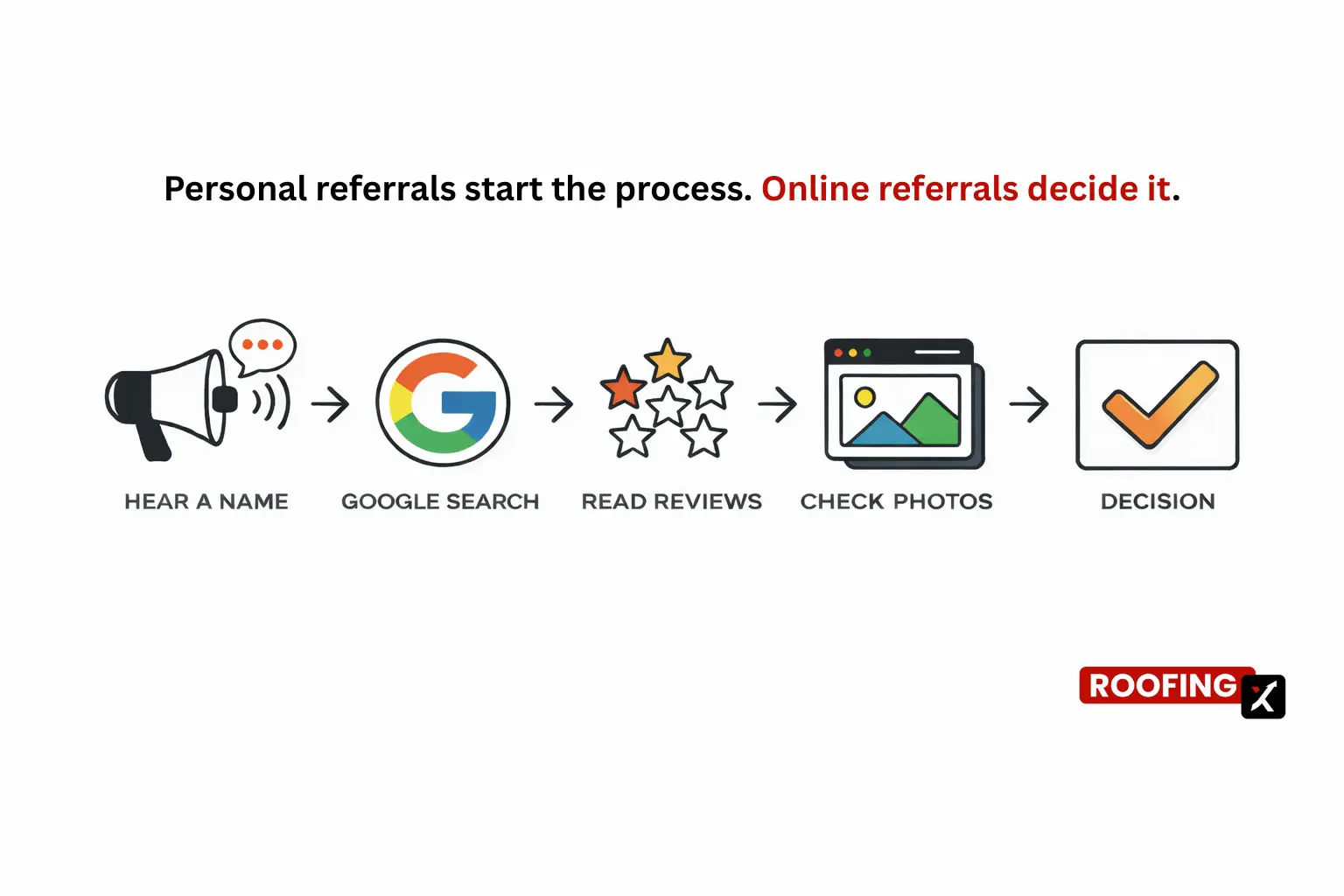
- SEO and Maps give you stability.
- Ads give you flexibility.
- Reviews and referrals increase trust across everything else.
What matters is intent. A smaller number of high-quality leads beats a flood of calls that don’t match your pricing, services, or crew capacity.
3. Standardize the Sales Process (No Heroes Needed)
If sales only work when one specific person is involved, growth hits a ceiling fast. That person is usually the business owner himself, based on what we hear from clients (and what Reddit discussions reveal).
So, you need:
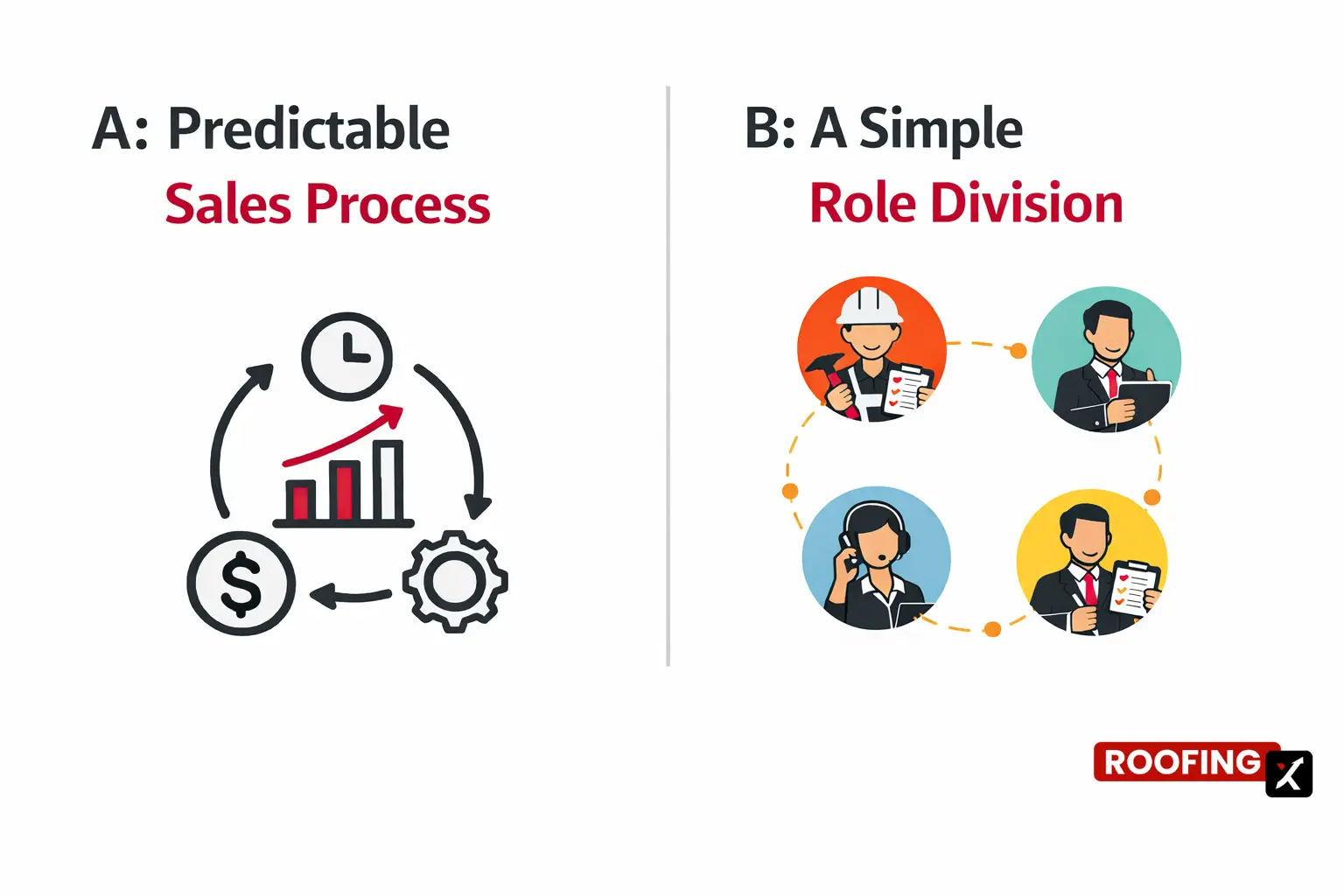
A: A predictable sales process to remove pressure from individuals and keep leads from slipping through the cracks (without involving any fancy tools at this stage).
B: A simple role division. Even if your team is really small, divide the key roles: who’s answering new calls, who sends estimates, who follows up, and who’s tracking the jobs.
Also, try to standardize these things, at a minimum:
- A clean workflow: inquiry → estimate → contract → install → follow-up
- One clear sales script so every homeowner gets the same explanation and expectations
- A simple estimating system that’s easy to present, understand, and follow up on
- Close-rate tracking by rep so you know what’s working and where deals are being lost
- Clear policies for callbacks, communication, and warranties
When sales are repeatable, installs become easier to plan.
4. Know Your Numbers Before They Know You
Do not skip this section!
We’ve seen too many times skipping this set point turning into stress, cash-flow problems, or growth that looks good on paper but feels shaky in real life.
You need to check your numbers every month and understand well enough to make decisions. So, start with these basics:
- Cost per lead & cost per job: What you pay to generate a lead, and what it actually costs to land a signed contract
- Gross margin by job type: Re-roofs, repairs, insurance work, storm jobs, each one behaves differently
- Monthly break-even point: The minimum revenue needed to cover labor, materials, overhead, and owner pay
Once you have that, your marketing decisions start being math (that’s what you want it to be).
Here’s how the main lead channels usually break down across roofing markets:
- Local SEO and Google Maps Optimization: Typically, the lowest cost per lead after 6-12 months. SEO doesn’t turn off when budgets tighten, and strong Google Business Profiles keep producing calls long after the work is done. Most roofing SEO programs cost $500-$2,000 per month.
- Paid ads: Useful for quick volume or seasonal gaps, but expensive and inconsistent. Local campaigns often cost $1,500-$3,000 per month, while national or aggressive markets can run much higher. When the budget stops, the leads stop.
- Reviews and reputation management: Low cost, high leverage. Reviews lower your cost per lead across every channel. A stronger reputation means fewer price shoppers and better jobs.
Each service or location page you build works like a salesperson, available 24/7, for a specific job type. Over time, that compounds. Ads don’t.
When you know your numbers, growth becomes intentional instead of reactive.
5. Plan Capacity Before You Increase Demand
Once your marketing starts working and the calls pick up, the bottleneck usually shifts from “not enough leads” to “not enough people.”
Before pushing demand higher, you need to know how much work your crews can handle. That starts with simple capacity planning:
- Crew capacity by week: How many installs each crew can complete without rushing or cutting corners
- Lead throttling when backlogs grow: Slowing ads or promotions when schedules are full instead of overbooking
- Seasonal planning: Hail season, shoulder months, and winter all behave differently and need different expectations
When capacity is planned, installs stay on schedule, and reviews stay positive. When it isn’t, small problems stack up fast.
Grow at the speed your crews can deliver consistent work. That’s how demand turns into profit instead of chaos.
6. Systemize Production & Quality Control
If you standardized the major processes in Step 3, you only need to add some simple standards to ensure quality isn’t affected, since you now have 30 clients instead of 3.
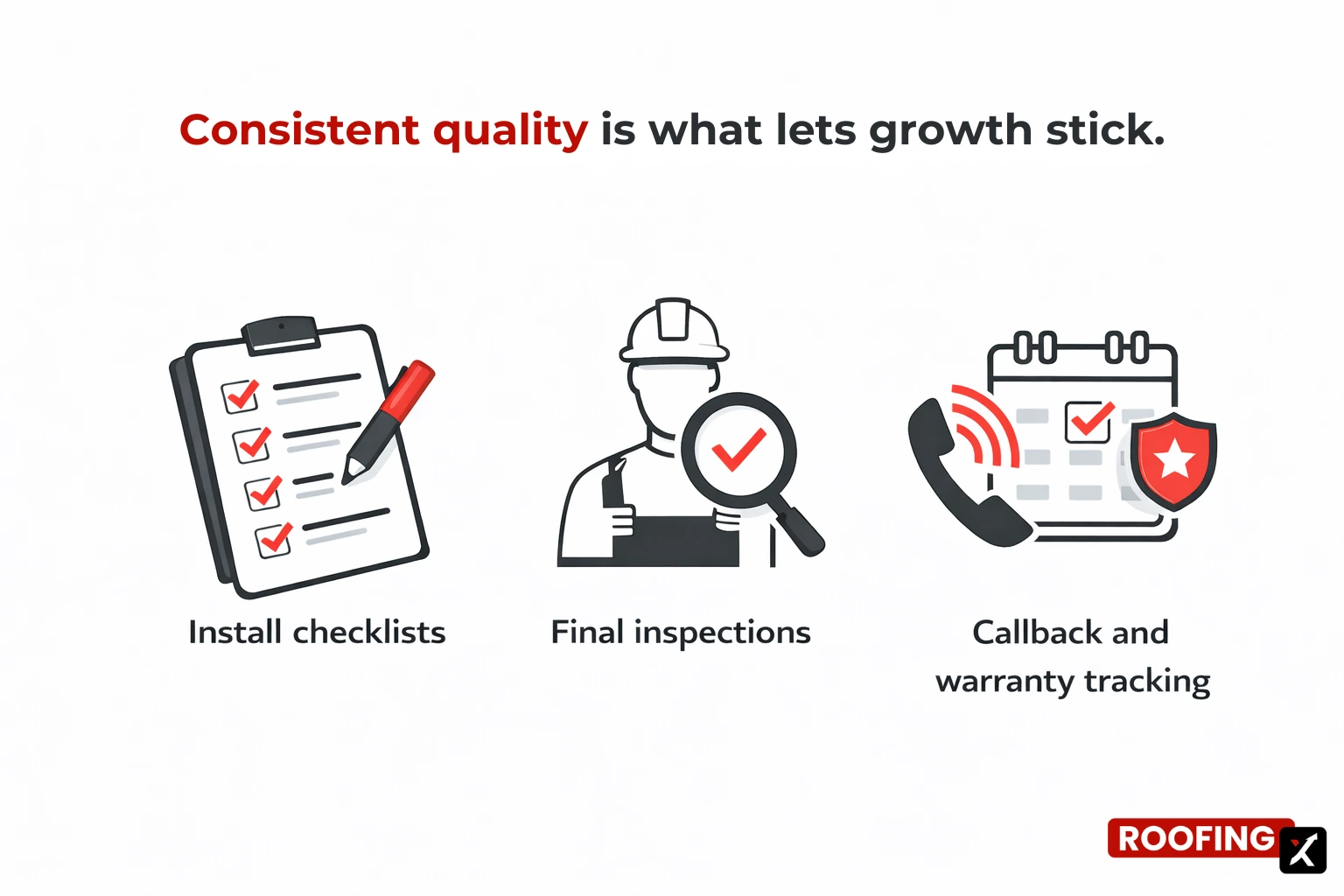
A few simple systems help here:
- Install checklists: Clear steps crews follow before, during, and after each job
- Final inspections: A consistent walkthrough to catch issues before the homeowner does
- Callback and warranty tracking: So small problems don’t turn into public complaints or lost referrals
These systems reduce mistakes, protect margins, and keep reviews strong as you take on more work.
One bad install can undo months of marketing. Consistent quality is what lets growth stick.
7. Optimize Scheduling, Dispatch & Job Flow
As volume increases, efficiency becomes as important as lead flow. Small delays, poor handoffs, and idle days quietly eat into margins. Similar to what we did in the previous step, simplify and optimize your operational processes:
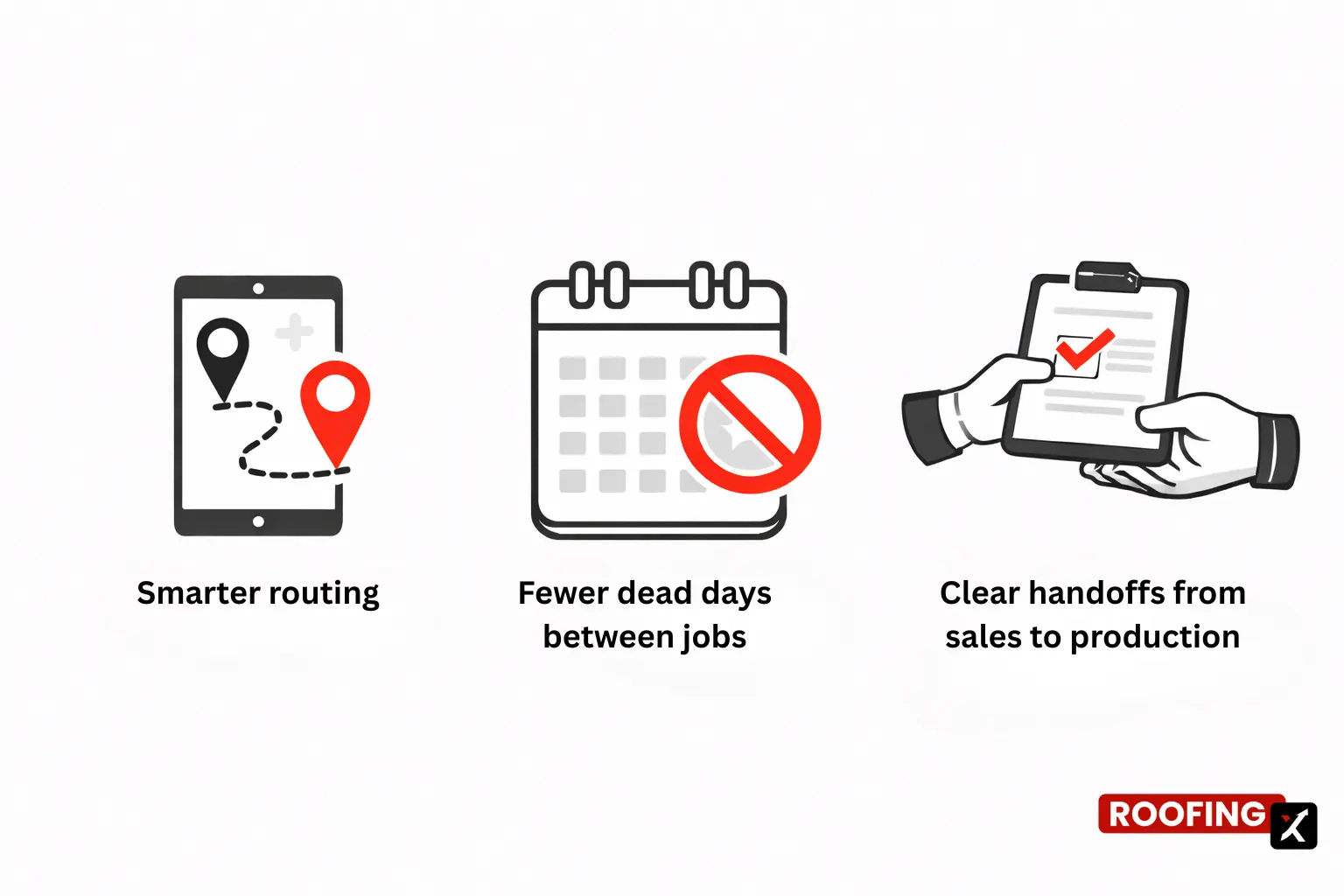
- Smarter routing: Group jobs by area to reduce drive time and crew fatigue
- Fewer dead days between jobs: Tight scheduling so crews aren’t waiting on materials, permits, or approvals
- Clear handoffs from sales to production: Complete job details are passed along, so crews aren’t guessing on-site
When scheduling works, crews stay productive, installs move faster, and costs stay under control.
8. Control Pricing and Profit as Volume Increases
Demand, job type, and season all change the risk and effort involved, and your pricing should reflect that and be really, really intentional:
- Adjust pricing based on demand and season: Peak periods should carry different pricing from slow months
- Price insurance and retail work differently: They follow different timelines, paperwork, and cash-flow patterns
Know when to say no: Some jobs look busy but quietly drain time, crews, and profit
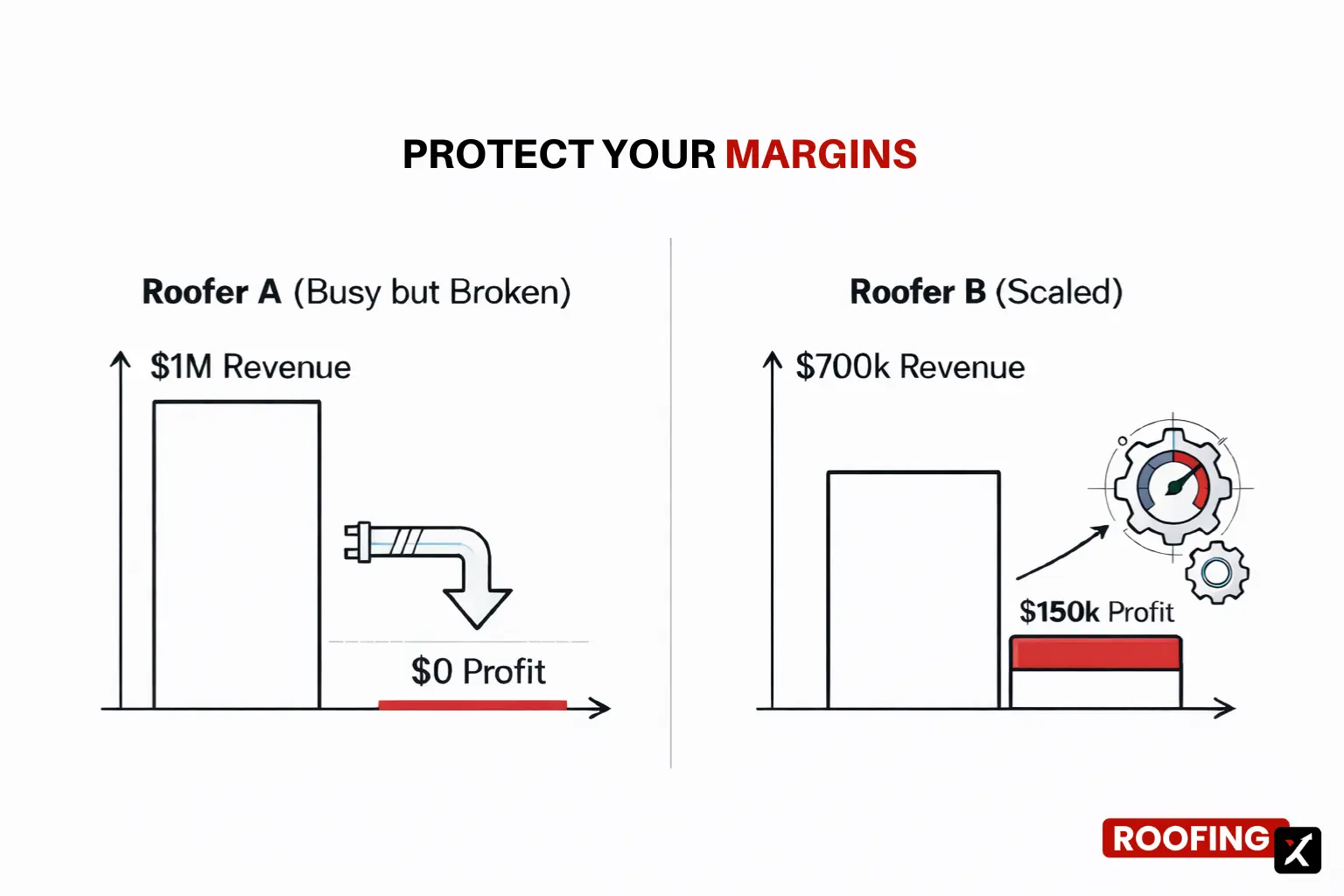
Busy schedules can feel like success, but revenue alone doesn’t pay the bills. A simple comparison makes this clear:
- Roofer A: $1M in revenue, $0 profit
- Roofer B: $700K in revenue, $150K profit
Gross profit is what’s left after labor and materials. Net profit is what remains after everything else. Margin is the percentage you keep.
To protect that margin, costs matter, but cutting in the wrong places backfires fast. Avoid saving money in areas that directly affect homeowners or job quality:
- Materials: cheaper shingles lead to callbacks and bad reviews
- Labor: untrained crews increase mistakes and rework
- Safety: injuries or fines can shut jobs down
- Customer communication: poor follow-up kills referrals
Marketing falls into the same category. Channels that consistently bring high-intent homeowners, like roofing SEO, tend to support stronger pricing and steadier margins when done correctly.
9. Hire for Structure and Training for Customer Experience
At this stage, hiring the wrong person hurts more than hiring late. One bad hire can slow production, damage reviews, and pull the owner back into daily firefighting.
You should prioritize roles in this order:
- Crew leaders, not just installers, so quality and communication don’t depend on the owner
- A sales manager before adding more sales reps, to keep follow-up and close rates consistent
- A production manager before burnout sets in, to protect schedules, crews, and margins
Once you have the right ones in place, train them properly!
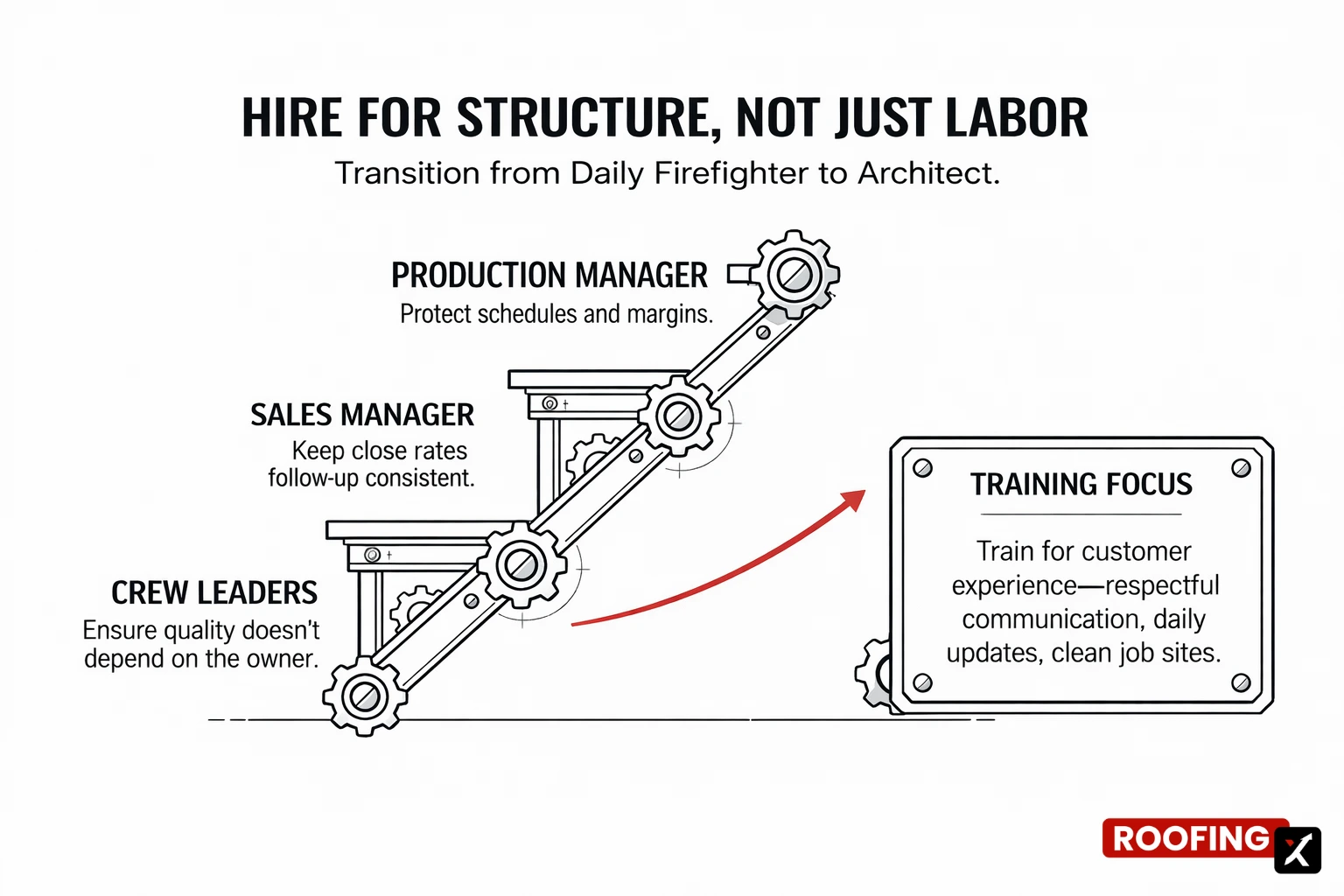
Homeowners tend to praise or complain about the same things, and none of them involve shingle alignment:
- Respectful communication
- Clear updates on what’s happening each day
- A clean, organized job site
- A final walkthrough to make sure they’re satisfied
Two companies can install the same roof. The one who communicates better earns the reviews, the referrals, and the repeat business.
A predictable team culture enables scaling. It allows you to:
- Take on more jobs without quality slipping
- Reduce callbacks that quietly destroy margins
- Keep reviews strong, which feeds your Google visibility
- Expand into new areas without panic hiring
At this point, growth depends less on marketing and more on people. The owner stops being the bottleneck, and the business starts running on structure instead of stress.
10. Automate Customer Communication
Once the business runs on people instead of the owner, communication needs the same support. Without it, small gaps turn into stress, callbacks, and negative reviews.
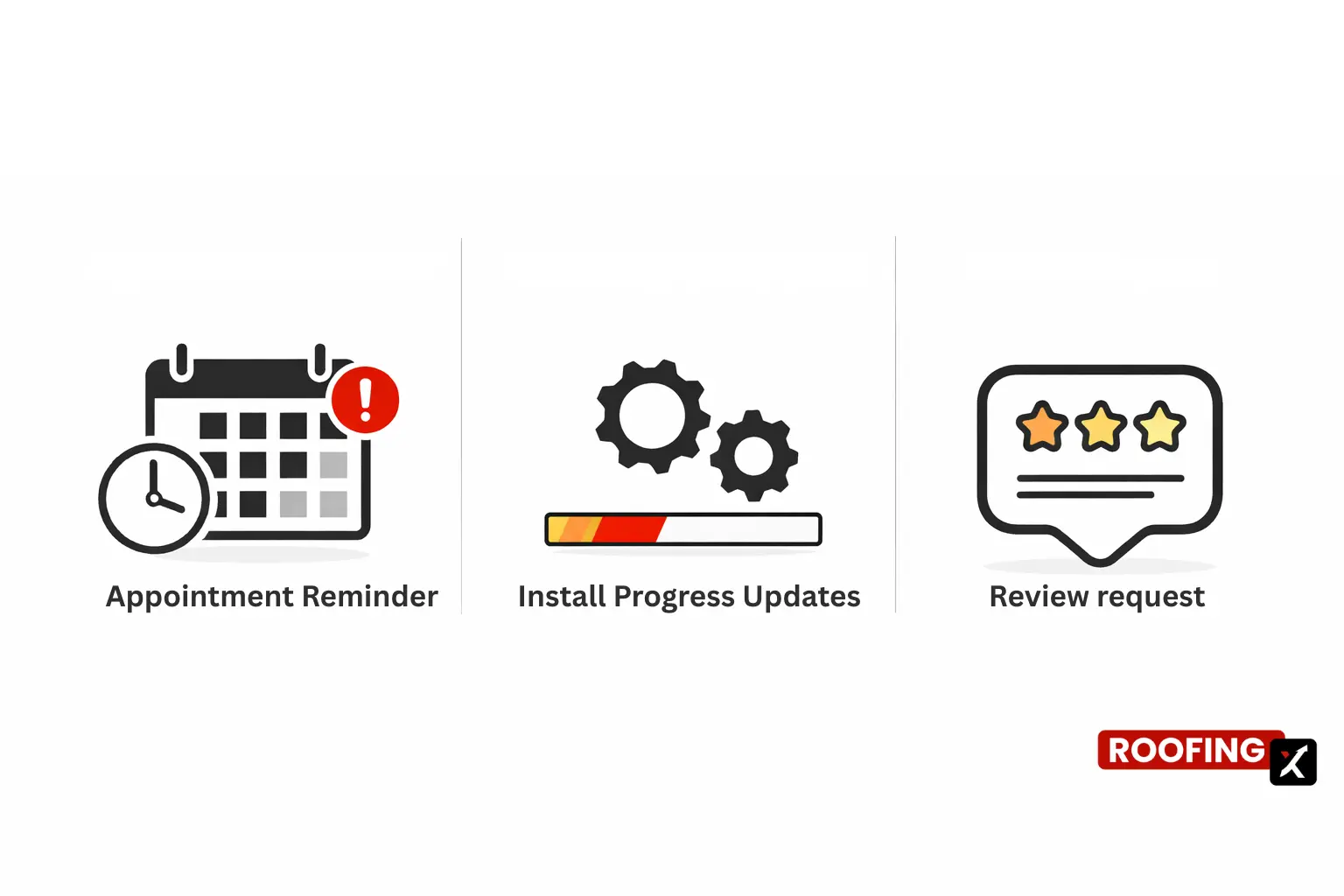
Just a quick note: This automation doesn’t replace relationships. Not at all. It protects them by making sure customers stay informed even when the team is busy.
You can consider automating a few areas:
- Appointment reminders: So homeowners know when to expect crews and don’t have to chase updates
- Install progress updates: Short, clear messages about what’s happening each day and what comes next
- Review requests after good jobs: Sent while satisfaction is high, not weeks later when the moment has passed
Consistent communication cuts interruptions and prevents misunderstandings. Crews install. Homeowners stay informed. Problems are handled early rather than publicly. That’s how growth stays controlled instead of chaotic.
11. Build Reputation & Reviews Into the System
We already mentioned reputation, but this step deserves its own focus.
Reputation is one of those things that don't scale on their own, and roofing reputation management is a bigger topic than most owners realize.
Reviews are the modern version of referrals, and they’re one of the strongest ranking factors in Google Maps. Based on our experience, the roofer with better reviews usually gets the call.
Reviews help you:
- Rank higher in Maps
- Get more clicks
- Win homeowners before they even call
- Justify stronger pricing
- Build long-term trust in storms or insurance situations
Here’s a simple review system that works for roofing companies:
- Ask in person when the homeowner is happiest (usually at the final walkthrough).
- Send a text with your direct Google review link.
- Make it part of your job checklist, not something you “remember when you remember.”
If you need support with setting up the right system, contact us, and we’ll guide you.
12. Expand Strategically with New Services and Markets
With everything else set, you might be thinking about realistic expansion next. Here, the key is to grow in ways that support your core business, not distract from it.
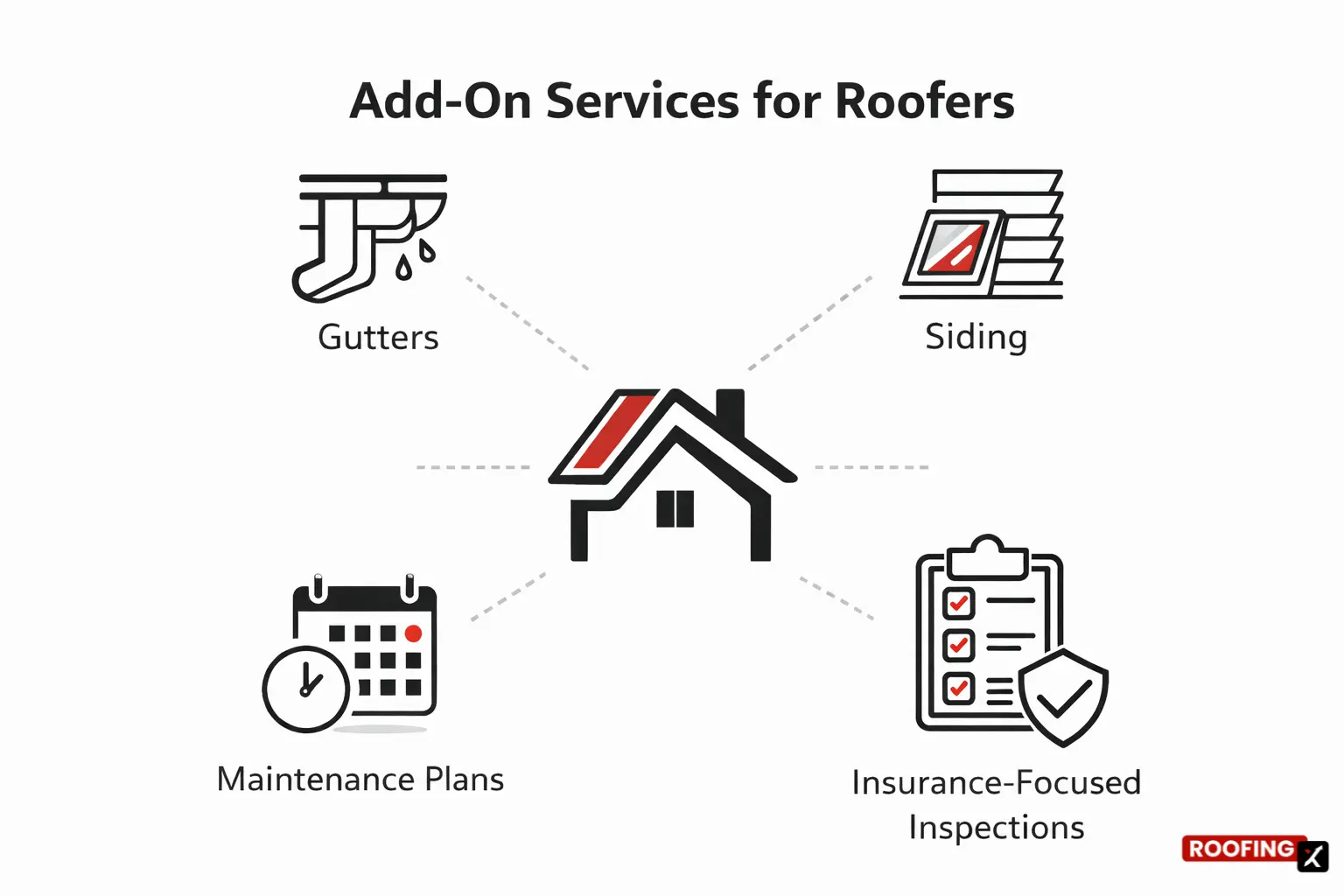
Start with add-on services that naturally fit what you do. These help smooth out seasonality and increase the value of each customer you serve. Roofers who scale well often add things like:
- Gutters
- Siding
- Skylights
- Maintenance plans
- Insurance-focused inspections
These only work if they match your brand and can be sold easily to the homeowners you already serve. Don’t add a random service just to look “bigger.” Add services that make your existing jobs more profitable and your off-season more stable.
When that foundation feels steady, you can explore larger, longer-term contracts. Commercial portfolios, school districts, and government work bring predictable pipelines and bigger jobs, but they come with slower payment cycles and more paperwork. These contracts make sense once your systems, reputation, and crew setup are solid enough to handle the extra coordination.
And if you’re thinking about entering new territories, take it slowly. A test-then-expand approach saves money and avoids overstretching:
- Create a location page for the new area
- Update your GBP and service areas
- Run a small ad test or targeted mailers
- Only send crews once the area produces consistent inquiries
Most roofing companies scale much more smoothly by dominating one market before spreading into five. Growth doesn’t come from planting flags everywhere, but rather from proving you can win consistently, then expanding that same system one area at a time.
13. Tighten Cash Flow & Risk Control
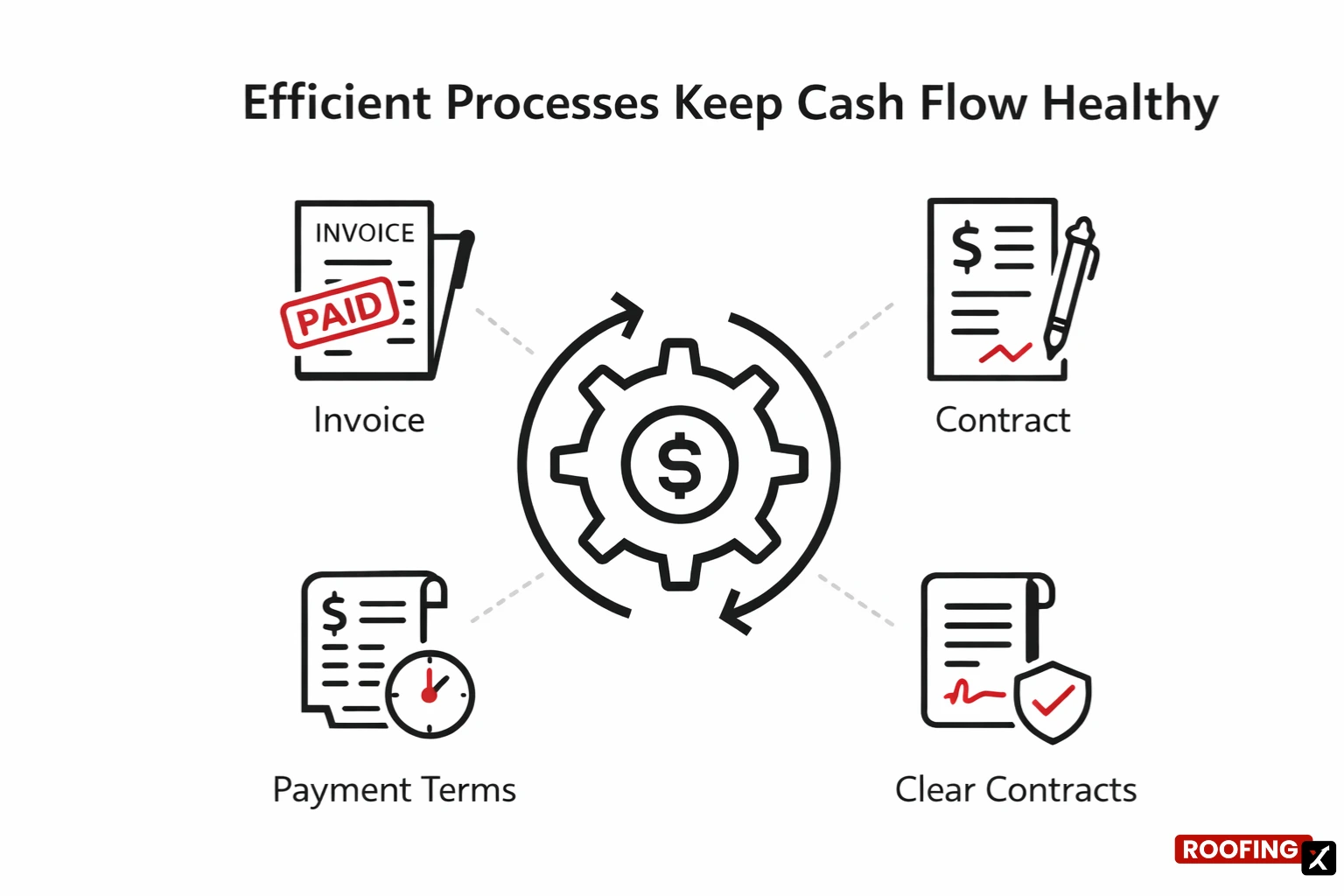
This final step is more of an insight, like a backbone that will support your scaling, and if it’s missing, you see issues pile up fast.
Cash flow stays healthy when invoicing is fast, payment terms are clear, and contracts leave no room for confusion. Delays here don’t just slow growth. They create stress and risk.
This is also where discipline matters. Safety practices, insurance coverage, and basic compliance need to be dialed in before volume increases further. One incident can undo months of progress.
Growth without control doesn’t show up immediately. It shows up later, and it’s always more expensive to fix.
Five-Sentence Takeaway for Roofing Businesses
Scaling a roofing business works best when you follow a clear order:
- Stabilize operations so crews, schedules, and quality can handle more work.
- Build demand you can control through Google visibility, reviews, and a repeatable sales process.
- Protect profit and cash flow before expanding services or entering new markets.
Pick one area from this guide to tighten this month. Most roofers see the fastest impact by improving Google visibility and review flow, where homeowners make their decisions. If you need support with any of those, feel free to contact us for a no-strings-attached conversation about your goals.


.webp)