



Today, homeowners can ask their phone "who repairs leaks in my roof right now near me?" and expect an oral response.
You want to be found when asked that question, and if you're going to do it, you have to make sure your Google My Business listing, keyword research, and content is optimized for voice search SEO. I'll walk you through it step-by-step.
Why is Voice Search More Important for Roofers Than Other Businesses?
Roofing is a highly intentional industry, which means people will typically only contact a roof repair company if it's absolutely necessary. When someone is calling a roofing professional via voice search, it's because they need it badly - whether that be fixing leaks in their roofs or damage from storms.
The part that should get your attention: voice assistants typically surface one answer, or maybe two or three. If your roofing business isn't that answer, you get skipped entirely.
This also means voice search rewards the same fundamentals as strong local SEO - it's not a separate strategy bolted onto your existing SEO. It's an extension of it. If your roofing SEO foundation is weak, voice search will expose that just as fast as traditional rankings do.
How Roofing Voice Queries Differ From Typed Searches
People type in fragments. They speak in full sentences. That distinction changes what you should be optimizing your content for:
Notice the pattern - voice queries add local intent ("near me," "right now"), context (cost, urgency, rating), and full question structure. Your content needs to match that phrasing.
1. Get Your Google Business Profile Right
This is the single most important lever for roofing voice search visibility, full stop. Voice assistants, especially Google Assistant and Google Home, pull directly from your Google Business Profile (GBP) to answer local queries.
What actually matters here:
- NAP consistency. Your business name, address, and phone number need to match exactly across your website, GBP, and every directory you're listed on. Even small mismatches ("St." vs. "Street") create doubt that hurts your visibility.
- Precise categorization. Use "Roofing Contractor," not just "Contractor" or "Construction Company." Voice assistants match category to query intent.
- Complete, current information. Hours (including holidays), service area, emergency availability, and photos of actual completed jobs.
- An active profile. Post updates, respond to every review, and keep your Q&A section filled with real questions homeowners ask.
If you're not sure where your GBP currently stands, a full (and free) roofing SEO audit will show you exactly what's missing before you spend time optimizing content around it. We've also written a deeper breakdown on Google Maps optimization for roofing if you want to go further on the local pack side specifically.
2. Target Conversational, Question-Based Keywords
Forget short-tail keywords like "roof repair." Voice search rewards long-tail, question-phrased content because that's literally what people are saying out loud.
Start by pulling real questions from:
- Phone call recordings or voicemail transcripts
- Emails and contact form submissions
- "People Also Ask" boxes for your core services
- Your own crew - ask what customers ask on-site
Examples of roofing-specific voice queries worth targeting:
- "Who is the best roofer for storm damage repairs near me?"
- "How much does it cost to replace a shingle roof in [city]?"
- "What are the signs that I should replace my roof?"
- "Do homeowner's policies cover roof replacement?"
- "How long does roof replacement take?"
Weave these into your service pages naturally, just written the way a person would ask them. If keyword research isn't your strength, our roofing keyword explorer is built specifically to surface these long-tail, question-based terms for the roofing industry, and our roofing-focused content writing team builds pages around exactly this kind of intent.
3. Structure Content to Be Answer-First
In voice assistants and increasingly AI Overviews, the questions get answered within the first one or two sentences, followed by details. Hiding your answers behind three paragraphs of intro information is not a good way to be noticed by either.
The pattern that works:
Question as a header > direct 1-2 sentence answer > supporting detail below
For instance, here is how it could be done for a roofing FAQ:
How much will it cost to replace my roof? Costs for replacing the roof will vary between $8,000 and $20,000, based on the size, material, and pitch of the roof. Replacing asphalt roofs will cost least; replacing metal and tile roofs will cost more. Free inspection will reveal the place of your specific roof in the price range.
What are the indications that my roof requires replacement? The signs which indicate the necessity to replace the roof are curling or missing shingles, presence of granules in the gutters, light through roof boards, and roof older than 20 years. You will require an inspection if you have two or more of these signs.
Will my homeowner's insurance policy cover the replacement of my roof? Yes, but only in case that the damage is caused by a storm, hail, and falling tree; not in case that the damage is caused by deterioration or neglect.
Note that each of these questions is answered in the same way as the initial one. That is how the answer would go in an oral discussion or an automatically generated response summary. This is precisely the structure that goes into our on-page roofing SEO work.
4. Use Schema Markup (But Know Its Real Limits)
Schema markup helps search engines and voice assistants understand what your content is - your business type, your services, your location. For roofing companies, the relevant types are:
- RoofingContractor (LocalBusiness subtype)
- LocalBusiness
- Organization
- Service
- AggregateRating
- BreadcrumbList
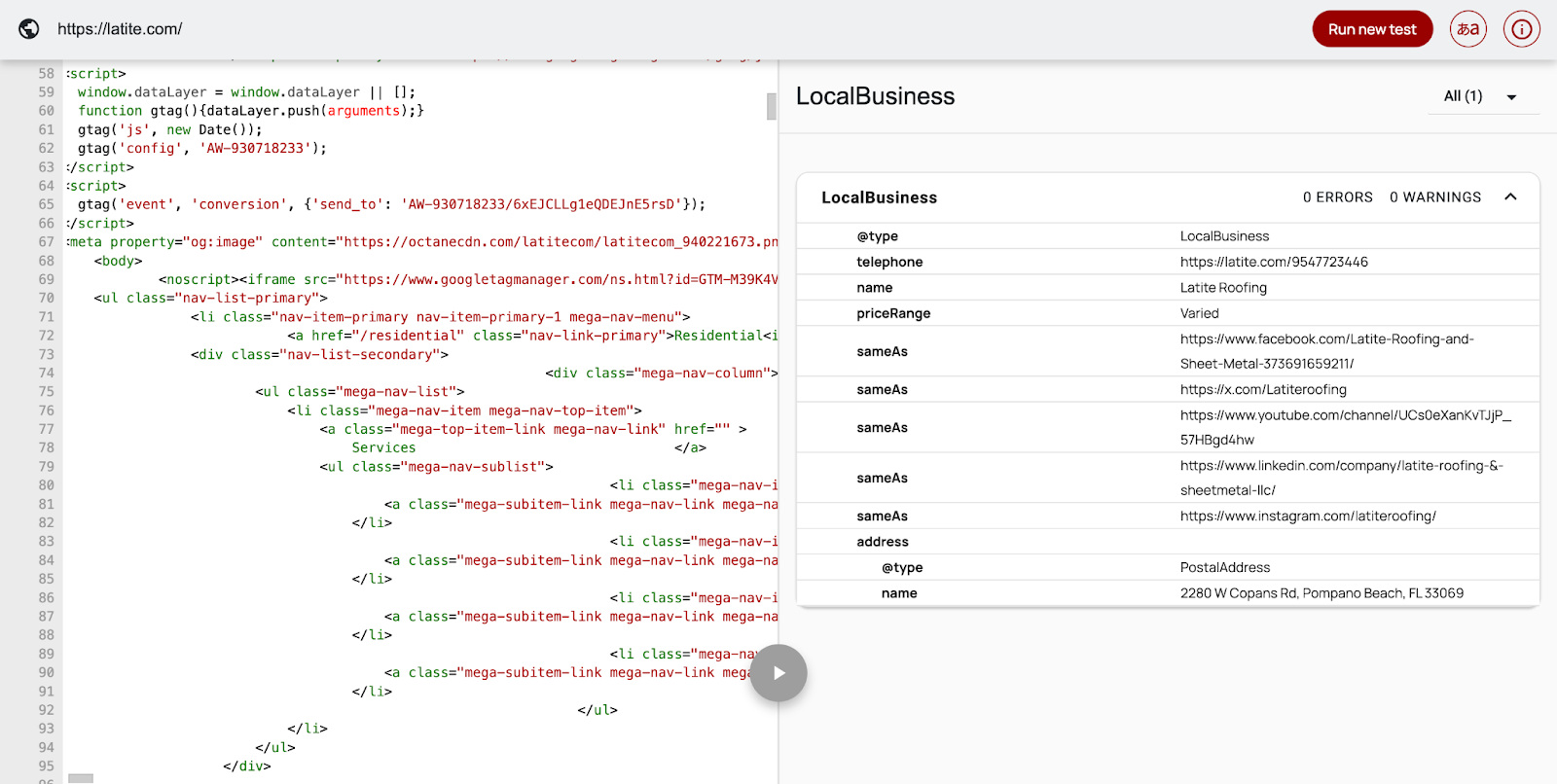
Here's a correction worth making explicitly, because a lot of advice on this topic is outdated: FAQPage schema no longer reliably produces rich results on Google - that display is now largely restricted to established government and health sites.
This doesn't mean FAQ content is worthless for voice or AI search. It still helps assistants and AI models understand and extract your answers. It just means you shouldn't structure your entire content strategy around getting a rich snippet that FAQ schema used to guarantee and mostly doesn't anymore.
If your site's technical foundation (schema, page speed, crawlability) hasn't been touched in a while, that's the layer worth fixing with roofing technical SEO before content.
5. Fix Mobile Speed and Core Web Vitals
Most voice searches happen on mobile - someone standing in their driveway after a storm, phone in hand. If your site is slow to load, has layout shift, or is clunky to navigate on a phone, you lose the "best answer" slot even if your content is otherwise excellent.
Prioritize:
- LCP (Largest Contentful Paint) - how fast your main content loads
- INP (Interaction to Next Paint) - how responsive your site feels when tapped
- CLS (Cumulative Layout Shift) - whether your page jumps around while loading
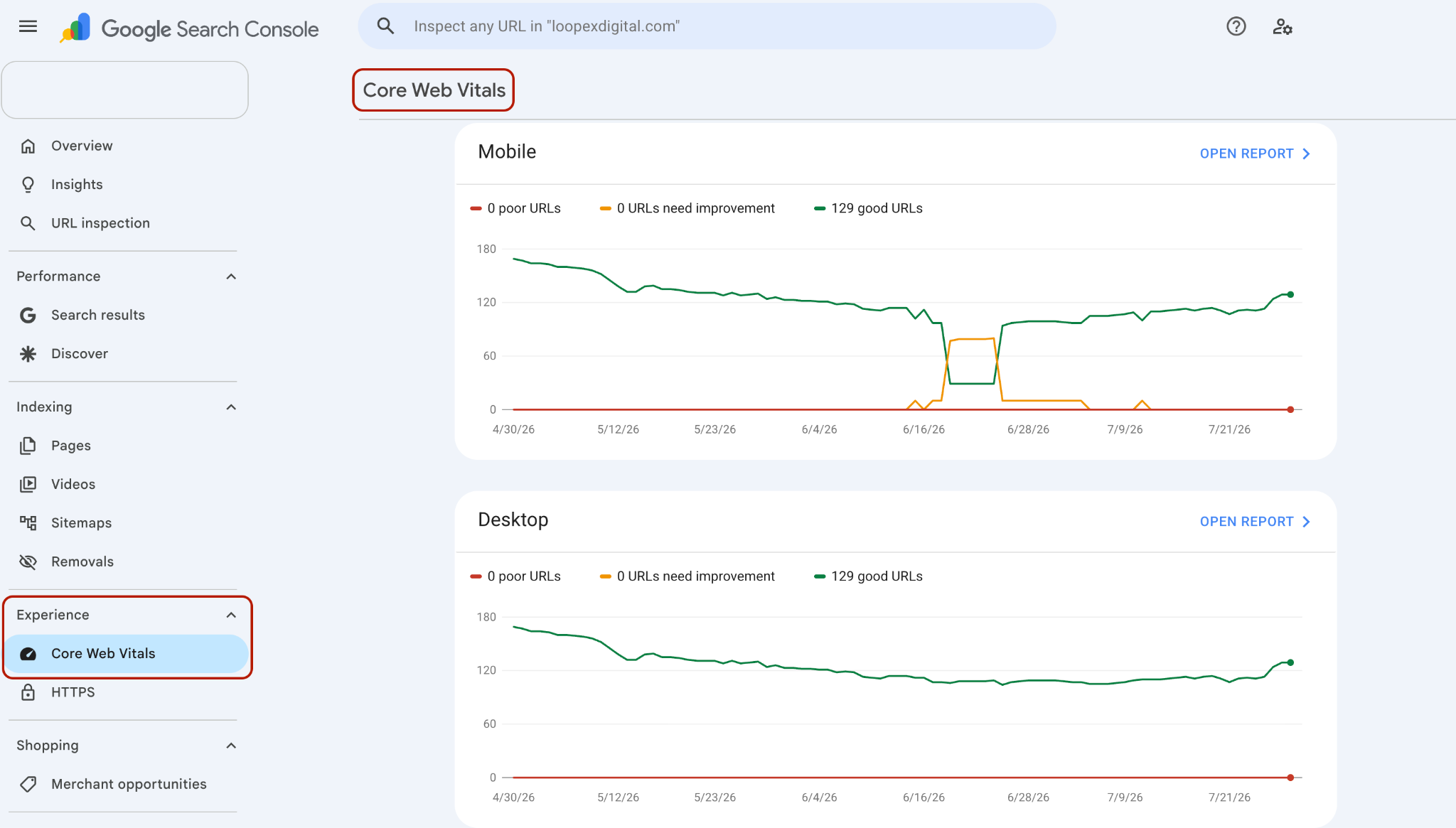
Check these in Google Search Console. A slow, dated roofing website is one of the most common things we find during audits, and one of the most fixable.
If your site itself is the bottleneck, it's often worth a rebuild rather than patchwork fixes; our roofing web design team builds specifically for speed and mobile usability from the ground up.
6. Systematically Build Reviews
Voice assistants consider ratings and review recency when deciding which roofer to recommend. So, you should systematically get new reviews in:
- Ask for reviews right after job completion, when satisfaction is highest
- Respond to every review, positive or negative - this signals an active, trustworthy business
- Aim for a steady trickle of new reviews rather than a one-time push
One thing our team has seen consistently across roofing clients: recency matters more than volume. A profile with 20 reviews from the last six months will often outperform one with 200 reviews that trail off two years ago. Voice assistants and homeowners read that as "still in business, still doing good work."
Roofing reputation management is all about keeping that flow consistent instead of relying on sporadic asks. You can learn more on how to do it yourself in our roofing reputation management guide.
Common Voice Search SEO Mistakes to Avoid
- Keyword stuffing. Voice assistants and AI models parse intent, so write like a person.
- Relying on FAQ schema alone for visibility. As covered above, it helps comprehension but won't guarantee a rich result anymore.
- Inconsistent NAP across directories. Even minor formatting differences erode the trust voice assistants need to recommend you.
- Ignoring page speed. A great answer on a slow page still loses to a decent answer on a fast one.
- Treating voice search as a separate initiative. It isn't. It's powered by the same local SEO signals - GBP strength, citations, reviews, content quality - as everything else. Building genuine authority through roofer link building and consistent content still underpins all of it.
How to Measure Voice Search SEO for Roofers
There is no dedicated "voice search" metric in Google Analytics or Search Console. Nothing will show you a clean line labeled "calls from Alexa." Anyone promising precise voice search attribution is overselling.
What you can track instead, as reliable proxies:
- Discovery searches in your Google Business Profile insights - growth here often correlates with voice and AI-driven visibility
- Phone call volume and timing - spikes around commute hours or right after storms are a good sign
- Direction requests - a strong indicator of "near me" query performance
- Branded search growth - people asking for you by name after hearing about you elsewhere
Set a baseline before you start optimizing, then track these monthly rather than day-to-day. Voice and AI search impact builds gradually as your information propagates and gets recognized as consistent and authoritative.
Wrap Up: Quick Checklist for Roofing Voice Search SEO
- Google Business Profile fully complete, categorized correctly, and NAP-consistent everywhere
- Content targets real, conversational, question-based queries
- Every FAQ/service page answers the question in the first 1-2 sentences
- LocalBusiness, RoofingContractor, and Service schema implemented
- Site passes Core Web Vitals on mobile
- Steady, recent flow of reviews with responses to all of them
- Tracking discovery searches, calls, and direction requests monthly
Our roofing SEO company has helped roofing companies across the country turn organic and local search into consistent lead flow - including 801% organic traffic growth for a Texas coastal roofer by owning storm-driven search demand, and 200% lead growth for a California roofing company through local SEO fundamentals- the same kind of work that underpins strong voice and AI search visibility.
If you're ready to see where your roofing company currently stands, contact us for a proposal and let’s talk.
Frequently Asked Questions
Does voice search affect local SEO for roofers?
Yes, they're not separate. Voice assistants pull from the same signals that drive local SEO: your Google Business Profile, citation consistency, reviews, and content quality. Improving one improves the other.
What's the fastest way to improve voice search visibility for roofers?
Start with your Google Business Profile - it's the primary data source for most voice assistants and the highest-leverage fix. From there, rewrite your top service pages to answer common questions directly in the first sentence.
Do I need schema markup for voice search?
It helps, but it's not a shortcut to guaranteed visibility - especially since FAQ schema rich results are now largely restricted on Google. Use LocalBusiness, RoofingContractor, and Service schema to help assistants and AI models understand your business accurately.
How long until I see results for roofing voice search SEO?
Most roofing companies see initial movement in discovery searches and call volume within 4-8 weeks, with more substantial gains over 2-3 months as reviews accumulate and content gets recognized as authoritative. Sites starting from a weaker foundation - inconsistent NAP, thin content, poor mobile speed - typically take longer.

.webp)