



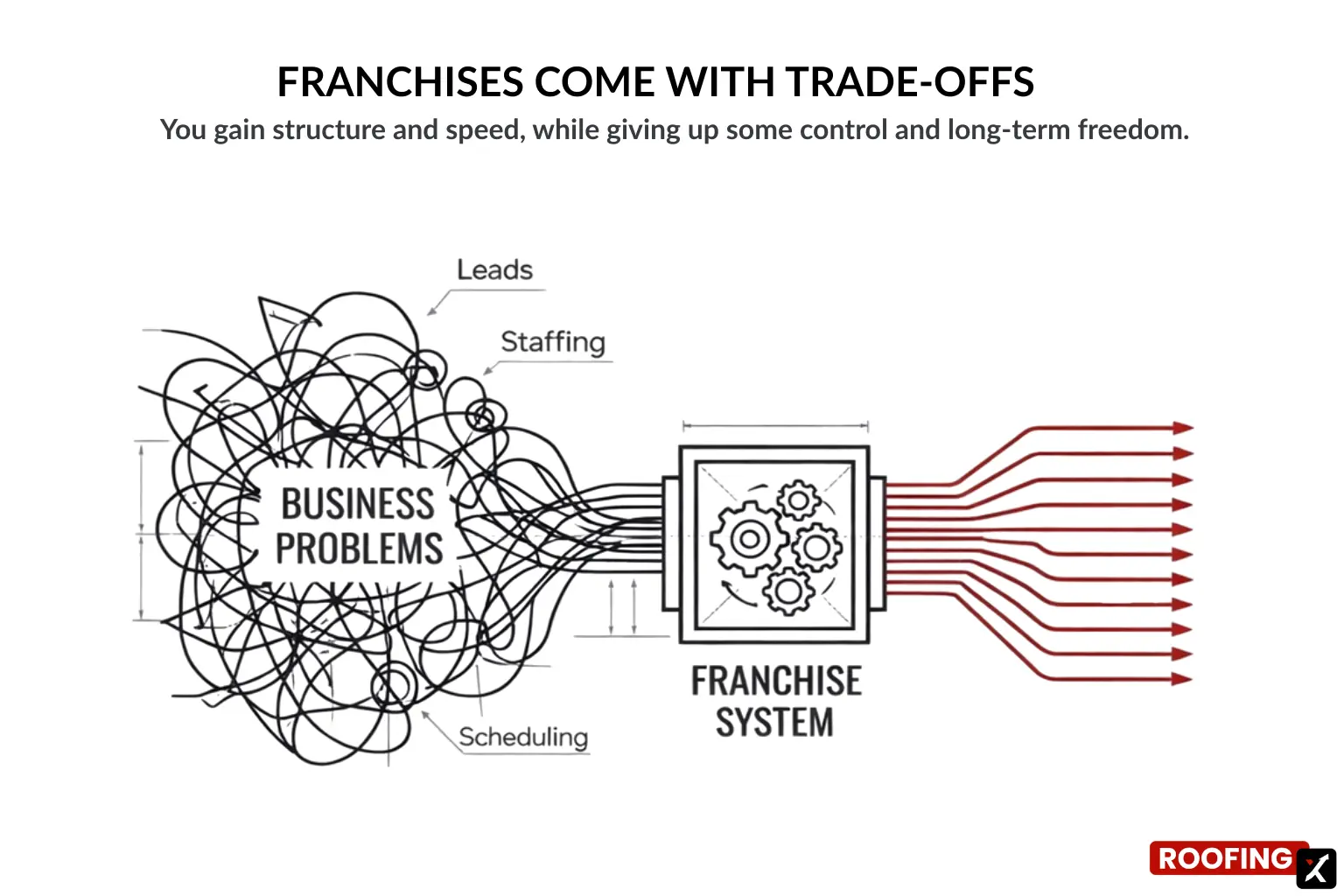
Roofing demand is steady; the harder part is running the business: leads, operations, follow-ups, and growth without disorder. Franchises can solve that, but they come with trade-offs. You gain structure and speed, while giving up some control and long-term freedom. Whether it’s worth it depends on how you want to run your company.
In this guide, I’ll walk through real roofing franchise opportunities and explain how franchising works, what you’re paying for, and how to evaluate options by paying attention to the details that matter before you commit.
Understanding Franchising Before You Look at Roofing Franchise Opportunities
A roofing franchise doesn’t change the work itself. You’re still running a local roofing business. You still manage crews, jobs, quality, and customers. What the franchise gives you is a predefined way of doing things, so you’re not rebuilding the business logic from zero.
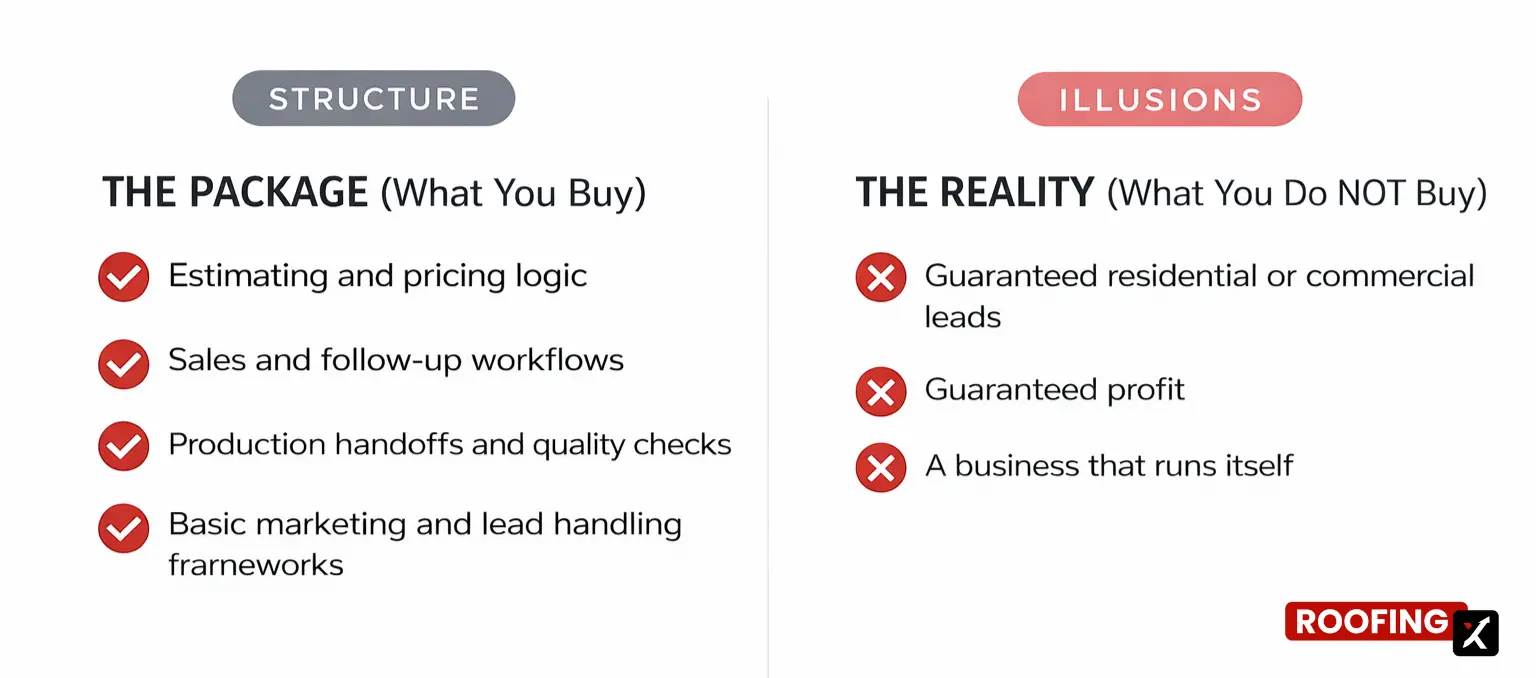
In practical terms, what you’re usually buying access to looks something like this:
- estimating and pricing jobs
- sales and follow-up workflows
- production handoffs and quality checks
- basic marketing and lead handling
What you’re not buying:
- guaranteed residential or commercial roofing leads
- guaranteed profit
- or a business that runs itself
This is where much of the early research goes wrong. A franchise is not merely brand usage, nor is it a partnership. You own and operate the business locally, but you must comply with the franchisor's rules. That distinction comes up constantly in beginner discussions and long explainers you’ll see across a typical roofing blog, and it matters more than it sounds once money is involved.
Roofing fits the franchise model because the problems repeat. Demand is ongoing, insurance work generates steady volume, and the same operational issues recur across markets. As roofing trends push the industry toward more structured operations, franchising becomes an obvious way to ensure consistency at scale.
Necessary to Note: The brand doesn’t handle the sales. A recognizable name can open doors, but local execution still determines whether the phone rings and whether jobs close.
Best Roofing Franchise Opportunities in 2026
1. Mighty Dog Roofing
Founded in 2017 and franchised since around 2019, Mighty Dog Roofing has grown to 100+ locations across the U.S. It’s a nationally recognized, tech-forward roofing brand backed by the HorsePower Brands platform. This franchise is best suited for sales-driven owners who enjoy in-home estimates, canvassing, and leading a small team. Semi-absentee ownership is possible later, but the early stage is very hands-on.
Mighty Dog Roofing cost and pricing overview:
- Franchise fee: ~$59,500 (10% veteran discount available)
- Estimated total investment: ~$171,524–$223,965 (can reach ~$320K with vehicles & working capital)
- Ongoing royalty: ~8.5% of gross revenue (tiered structure)
- Marketing/brand fund: ~$2,000/month or ~5% of revenue + national fund
- Other required costs: Vehicles, CRM/software, equipment, staffing, insurance
- Financial requirements: ~$75,000 liquid capital, ~$300,000 net worth
Lead generation model:
Mighty Dog uses a mix of centralized digital marketing and local owner-driven outreach. Corporate handles the website, paid ads, SEO, and call center, while franchisees are responsible for canvassing, referrals, and community marketing.
- Lead source: Mixed (corporate + owner)
- Marketing structure: National + required local spend
- Lead exclusivity: Territory-based routing through CRM/call center
- Owner involvement: High, especially in early stages
- If leads slow: Brand helps optimize, but no revenue guarantees
Systems and support:
Mighty Dog offers a structured, process-heavy system with strong sales, marketing, and operations support.
- Initial training: 1-2 weeks (classroom + field)
- Sales process: Consultative, inspection-based, with scripts & proposals
- CRM/software: Integrated system for leads, scheduling, and job management
- Operations playbooks: Production workflows, safety standards, vendor lists
- Ongoing support: Coaching calls, webinars, performance reviews, launch support
Control and flexibility:
You get solid operational control, but branding and vendor choices are tightly guided.
- Pricing control: Mostly flexible within brand guidelines
- Vendors/materials: Preferred supplier system required
- Branding: Standardized logos, trucks, and website
- Local decisions: You control hiring, partnerships, and daily ops
Exit considerations:
Franchises can be resold to approved buyers, usually with a transfer fee.
- Contract term: ~10 years
- Resale: Allowed with franchisor approval
- Transfer fees: Apply (see FDD Item 6)
Bottom-line takeaway:
Best for: Sales-focused owners who want a tech-powered, marketing-driven roofing business with a clear playbook.
Skip if: You’re looking for low-effort, absentee ownership, or dislike canvassing and in-home sales.
2. Honest Abe Roofing
Honest Abe Roofing was founded in 2007, but started franchising around 2017. It has grown to roughly 50-60 locations across the U.S., with a strong presence in the Midwest and South. The brand is built around a high-volume, call-center-style sales model for residential re-roofing. It’s best suited for sales-focused, hands-on owner-operators who are comfortable running structured sales teams and investing in consistent local advertising.
Honest Abe Roofing cost and pricing overview:
- Franchise fee: $35,000–$200,000 (varies by territory size/configuration)
- Estimated total investment: ~$185,024–$466,341
- Ongoing royalty: ~5% of gross sales
- Marketing/brand fund: 2% ad fund + required local advertising spend
- Other required costs: CRM/software, staffing, vehicles, insurance, marketing
- Financial requirements: ~$70K–$100K liquid capital, ~$200K–$300K net worth
Lead generation model:
Honest Abe runs a marketing-heavy, inbound-call-driven model. Think TV, radio, digital ads, and direct mail, all designed to keep the phones ringing and feed a high-volume sales operation.
- Lead source: Central brand + owner-funded local advertising
- Marketing structure: Corporate strategy, local execution
- Lead exclusivity: Territory-based
- Owner involvement: High, especially with ad spend and sales teams
- If leads slow: Increase advertising and refine sales process (no guarantees)
Systems and support:
The brand is very process-driven, with strong sales scripting and structured marketing support.
- Initial training: Sales, operations, and marketing onboarding
- Sales process: Scripted in-home presentations with financing focus
- CRM/software: Dedicated systems for calls, appointments, and follow-ups
- Operations playbooks: Inspections, production, collections, scheduling
- Ongoing support: Coaching calls, events, and field visits
Territory and growth rules:
Honest Abe is designed for growth, with protected territories and scaling options.
- Territory protection: Yes (geographic/demographic-based)
- Crew expansion: Multiple crews and satellite offices allowed
- Multi-territory ownership: Available for strong performers
- Expansion limits: Must stay within approved regions
Control and flexibility:
You run your business, but branding and messaging are tightly controlled.
- Pricing control: Flexible within brand guidelines
- Vendors/materials: Preferred manufacturers required
- Branding: Strongly standardized messaging and visuals
- Local decisions: You control hiring, culture, and sales comp
Exit considerations:
Resale is allowed with standard franchise approval and fees.
- Contract term: ~10 years
- Resale: Allowed with franchisor approval
- Transfer fees: Apply
Bottom-line takeaway:
Best for: Owners who want a high-volume, marketing-driven roofing business with structured sales systems and strong brand positioning.
Skip if: You prefer organic lead flow, low ad spend, or a small, hands-on craft-style roofing operation.
3. Storm Guard Roofing and Construction
Storm Guard has been operating since the mid-2000s and has spent over a decade building its franchise network. Today, it runs several dozen locations across the U.S., mainly in storm-active regions. The business focuses on exterior restoration for both residential and light commercial properties. It’s a good fit for owners who can balance sales with hands-on operations across multiple services like roofing, siding, windows, gutters, and painting.
Storm Guard cost and pricing overview:
- Franchise fee: $65,000
- Estimated total investment: Typically in the mid- to high-$200Ks (full breakdown in the FDD)
- Ongoing royalties: Tiered by revenue level
- Marketing/brand fund: Required + local marketing spend
- Other required costs: Vehicles, equipment, CRM tools, staffing, insurance
- Cash needs: Strong working capital recommended due to insurance payment timelines
Lead generation model:
Storm Guard’s business comes from a mix of storm restoration and everyday exterior projects. Weather events drive big spikes in demand, while retail services help smooth out slower periods.
- Lead source: Insurance claims + retail services
- Marketing structure: Corporate guidance, local execution
- Lead exclusivity: Territory-based
- Owner involvement: High during storm response
- If leads slow: Shift focus between retail and insurance work
Systems and support:
The franchise system focuses on helping owners manage complex restoration projects and multiple service lines efficiently.
- Initial training: Insurance, construction management, business ops
- Sales process: Structured approach for claims and retail customers
- CRM/software: Tools for claims, estimates, and multi-trade jobs
- Operations playbooks: Storm response, inspections, production workflows
- Ongoing support: Coaching, benchmarking, and field guidance
Territory and growth rules:
Storm Guard territories are designed to support expansion across multiple exterior services.
- Territory protection: Yes
- Crew expansion: Multiple trade teams allowed
- Multi-territory ownership: Available for strong performers
- Expansion limits: Approval needed for cross-territory storm work
Control and flexibility:
You have room to run your operation your way, but within brand and compliance standards.
- Pricing control: Flexible for retail, guided for insurance work
- Vendors/materials: Preferred supplier network
- Branding: Standard look with local customization options
- Local decisions: High autonomy for operations and staffing
Exit considerations:
Storm Guard franchises can be sold to approved buyers under standard franchise terms.
- Contract term: Multi-year
- Resale: Allowed with approval
- Transfer fees: Apply per FDD
Bottom-line takeaway:
Best for: Owners who are comfortable with insurance restoration, seasonal demand, and managing multiple exterior trades.
Skip if: You want a simple, predictable retail roofing business with minimal operational complexity.
4. Bumble Roofing
Launched in 2019 and franchising shortly after, Bumble Roofing is one of the newer players in the roofing franchise space. With roughly 25 locations and plenty of open territories, it’s still in growth mode across the U.S. The brand is designed for owners who like streamlined systems, digital marketing, and a tech-forward approach, not a massive door-knocking sales force.
Bumble Roofing cost and pricing overview:
- Franchise fee: ~$49,500
- Estimated total investment: ~$171,988–$313,834
- Ongoing royalties: Mid single-digit range (see FDD)
- Marketing/brand fund: Required + local digital spend
- Other required costs: CRM tools, vehicles, equipment, staffing
- Financial requirements: ~$100K liquid capital, ~$250K net worth
Lead generation model:
Bumble focuses on online lead flow and fast, tech-powered quoting instead of traditional canvassing-heavy sales.
- Lead source: Digital marketing + online quoting
- Marketing structure: Corporate tools, local execution
- Lead exclusivity: Territory-based routing
- Owner involvement: Moderate, mainly in marketing and follow-up
- If leads slow: Optimize digital campaigns and promote recurring services
Systems and support:
This franchise leans heavily on software and automation to keep operations lean and efficient.
- Initial training: Business, marketing, and systems onboarding
- Sales process: Transparent, low-pressure quoting
- CRM/software: Satellite imagery estimates + scheduling tools
- Operations playbooks: Roofing, maintenance, solar, gutters
- Ongoing support: Coaching from experienced construction leaders
Territory and growth rules:
Bumble offers exclusive territories with room to expand into multiple service lines.
- Territory protection: Yes
- Crew expansion: Flexible multi-crew model
- Multi-territory ownership: Available
- Expansion limits: Approval needed outside your territory
Control and flexibility:
Owners get room to run the business while staying aligned with the brand.
- Pricing control: Owner-set within brand guidelines
- Vendors/materials: Approved suppliers with purchasing power
- Branding: Modern, standardized look
- Local decisions: Strong flexibility in services and partnerships
Exit considerations:
Standard franchise resale options apply.
- Contract term: Multi-year
- Resale: Allowed with approval
- Transfer fees: Apply per FDD
Bottom-line takeaway:
Best for: Owners who want a modern, tech-driven roofing business with recurring services and minimal door-to-door sales.
Skip if: You prefer a long-established franchise with decades of brand history.
5. Total Cladding and Roofing
Total Cladding and Roofing is a U.K.-based commercial roofing and cladding brand that started franchising in the mid-2020s. The network is still in its early growth phase, with only a small number of territories awarded so far. It focuses on industrial and commercial projects rather than residential work. This opportunity is best suited for operators who are comfortable selling to landlords, developers, and facilities managers, and managing larger, longer-term projects.
Total Cladding and Roofing cost and pricing overview:
- U.K. franchise fee: ~£25,000 (discounted to £21,600 for early partners)
- Ongoing support fee (U.K.): £500–£750 per month (no percentage royalty)
- Estimated startup investment: Lower than many £30K–£50K trade franchises, depending on vehicles and equipment
- U.S. option: $80,000 franchise fee + $650–$850 monthly support fee
- Other required costs: Vehicles, tools, insurance, working capital
Lead generation model:
The brand combines central marketing with local relationship-building to bring in commercial work.
- Lead source: Central digital marketing + referrals
- Marketing structure: Head office runs SEO and campaigns
- Lead exclusivity: Territory-based, no lead sharing
- Owner involvement: High in networking and closing deals
- If leads slow: Focus shifts to outreach and account management
Systems and support:
Support is built around helping franchisees win and deliver complex commercial projects.
- Initial training: Quoting, safety, operations, and sales
- Sales process: Structured site surveys and proposal system
- CRM/software: Central CRM included in monthly fee
- Operations playbooks: H&S compliance, commercial workflows
- Ongoing support: Coaching, tender support, and expert guidance
Territory and growth rules:
Territories are exclusive and designed for serious commercial operators.
- Territory protection: Yes
- Growth potential: Built for six- to seven-figure turnover
- Multi-territory options: Available for early partners
- Expansion limits: Cross-border work approved case by case
Control and flexibility:
Franchisees have strong operational freedom within brand guidelines.
- Pricing control: Set your own job pricing
- Vendors/materials: Trade discounts, no strict supplier lock-in
- Branding: Centralized digital marketing, consistent brand look
- Local decisions: High control over staffing and projects
Exit considerations:
The business is positioned as a long-term asset with resale potential.
- Contract term: Standard multi-year
- Resale: Allowed with approval
- Transfer fees: Likely apply (see contract)
Bottom-line takeaway:
Best for: Operators who want to build a commercial-scale roofing and cladding business with flat monthly fees and no revenue royalties.
Skip if: You prefer quick residential jobs or don’t enjoy long B2B sales cycles and compliance-heavy work.
What You Need to Start a Roofing Service Franchise
The first thing to understand is that the franchise fee is only one part of the picture. Starting a roofing service franchise looks more like starting a real business than buying a packaged product.
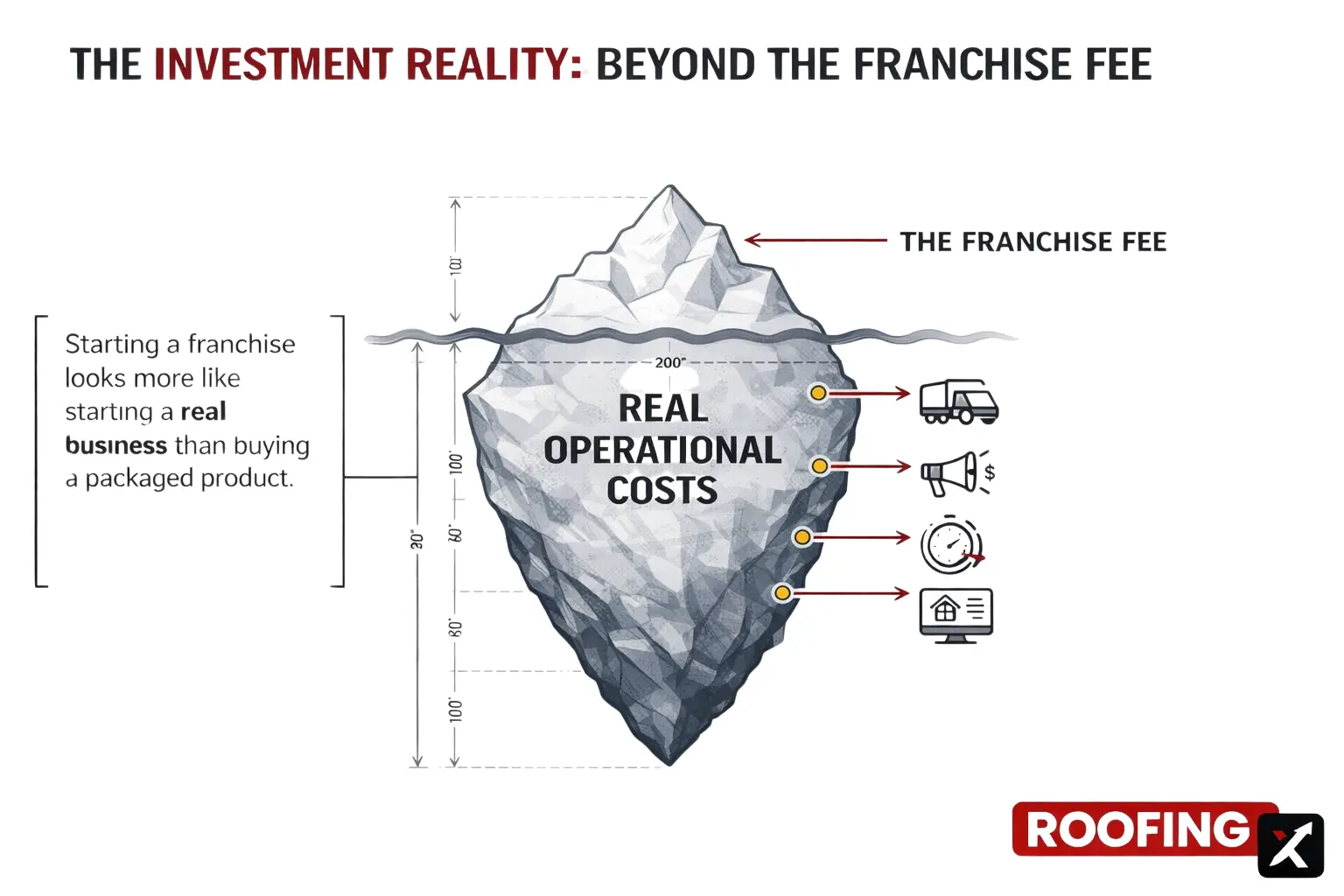
Beyond the initial fee, you’re usually budgeting for:
- vehicles, equipment, and initial staffing
- local marketing and launch costs
- operating the runway for the first few months
- systems to manage leads, jobs, and follow-ups, often through a roofing CRM
Time commitment matters just as much as money. Most successful franchisees are operators, especially early on. Someone has to oversee crews, manage schedules, handle estimates, and ensure nothing slips through the cracks. That “someone” is usually you.
Roofing experience helps, but it’s not the only factor. Sales, operations, and follow-through matter just as much. You’re buying a system to reduce mistakes, but the system still needs discipline to work. Tools like standardized websites or roofing website builders, and conversion-focused assets like roofing landing pages, only perform when appropriately used.
Capital, Time, and Experience Expectations
Here’s the reality most people underestimate:
- There’s an upfront investment and ongoing fees
- Early cash flow pressure is common
- This is not passive income in the first phase
If you’re expecting the business to run itself while you step back, a franchise will disappoint you.
Territory, Fees, and Operational Control
This is where long-term outcomes are shaped, and it’s worth reading closely.
- Territory rules limit or enable future growth
- Ongoing royalties affect margins as revenue scales
- Reduced control over branding and processes is the trade-off for structure
None of these is a deal-breaker on its own. They just define the type of business you’re choosing to run, and how much flexibility you’re willing to give up in exchange for a system.
Why Roofing Franchise Opportunities Attract Entrepreneurs
- Faster Market Entry: Although you’re starting a new business, you’re not starting from zero. Systems for lead handling, estimating, and follow-ups are already in place, similar to those established roofing lead-generation companies build over time.
- Built-In Brand Trust: A recognizable name reduces homeowner hesitation, especially in storm-driven markets where speed and credibility influence who gets the call.
- Fewer Early Mistakes: Standardized processes help avoid common issues with pricing, insurance handling, and missed follow-ups during the early stages.
- Structure Over Flexibility: For some operators, clear rules and processes are more valuable than full flexibility. That trade-off is the real appeal.
Roofing Franchise vs Starting Your Own Roofing Company
There’s no “right” choice here, only a better fit for how you want to operate over the long term. Here’s the clearest way to look at it:
Criteria
Roofing Franchise
Starting Your Own Roofing Business
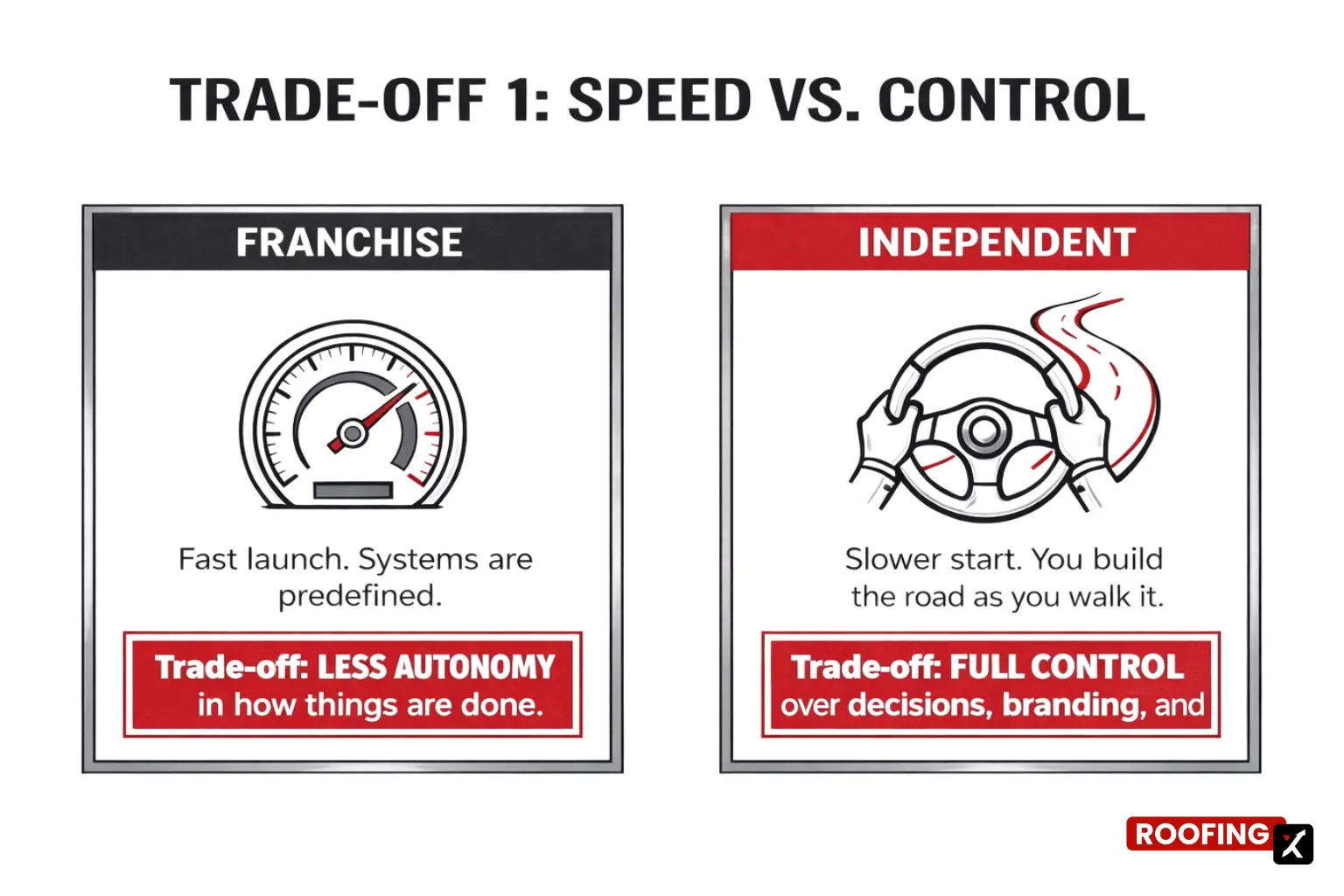
Speed vs Control
Faster to launch with predefined systems, but less autonomy in how things are done
Slower start, but full control over decisions, branding, and direction
Systems vs Flexibility
Proven processes for sales, estimating, follow-ups, and operations
Full flexibility to adapt systems to your local market and experiment
Marketing Setup
Standardized marketing frameworks, often centrally guided
You build everything yourself, from local SEO to Google Maps optimization for roofing
Growth Strategy
Growth is shaped by territory rules and franchise guidelines
Growth is only limited by capital, execution, and digital marketing for roofers
Fees vs Long-Term Equity
Ongoing franchise fees never go away
No royalties; the brand equity you build is fully yours
5-10 Year Outlook
Predictable structure, but capped flexibility long-term
More risk early, more upside if executed well
I always encourage people to think in 5-10-year windows, not year one. Short-term ease can look attractive, but long-term control and equity matter more once the business stabilizes.
How I’d Evaluate a Roofing Franchise Opportunity
Before signing anything, I’d slow down and pressure-test the opportunity from angles that marketing pages usually skip. Here’s what I’d look at, in order:
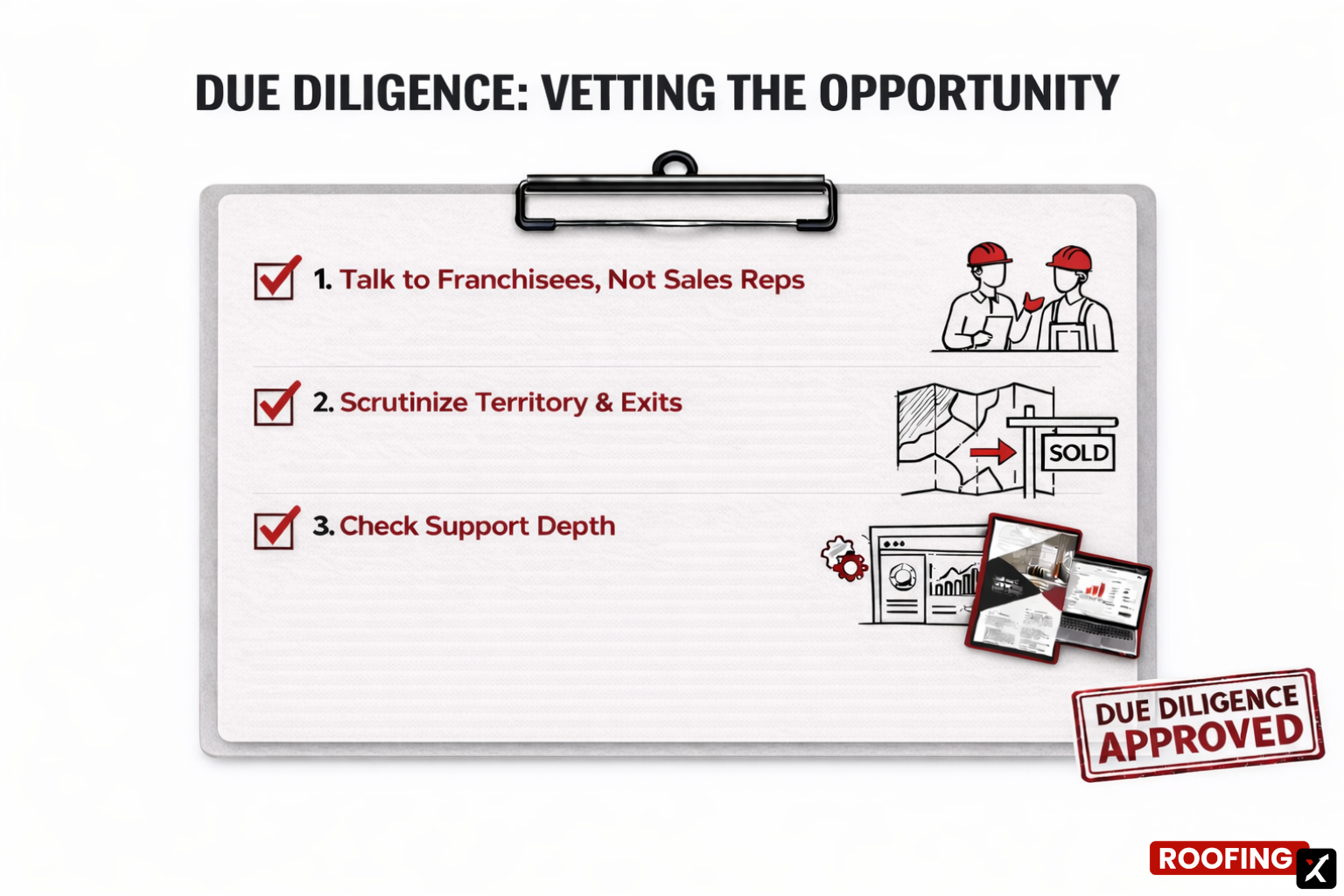
- Talk to franchisees, not sales reps. I’d speak with current owners and former employees. Sales reps sell potential; franchisees live with the system. Their answers show you what support will look like once the contract is signed.
- Scrutinize territory protection and exit options. I’d read the fine print on exclusivity, expansion limits, and resale rights. These details quietly shape your upside, and your ability to leave if things don’t work out.
- Break down marketing support realistically: I’d separate what’s included from what’s optional. Do they actually run campaigns, or just provide templates? Can you control spending across channels like Google Ads or targeting homeowners on Facebook, or is everything centralized?
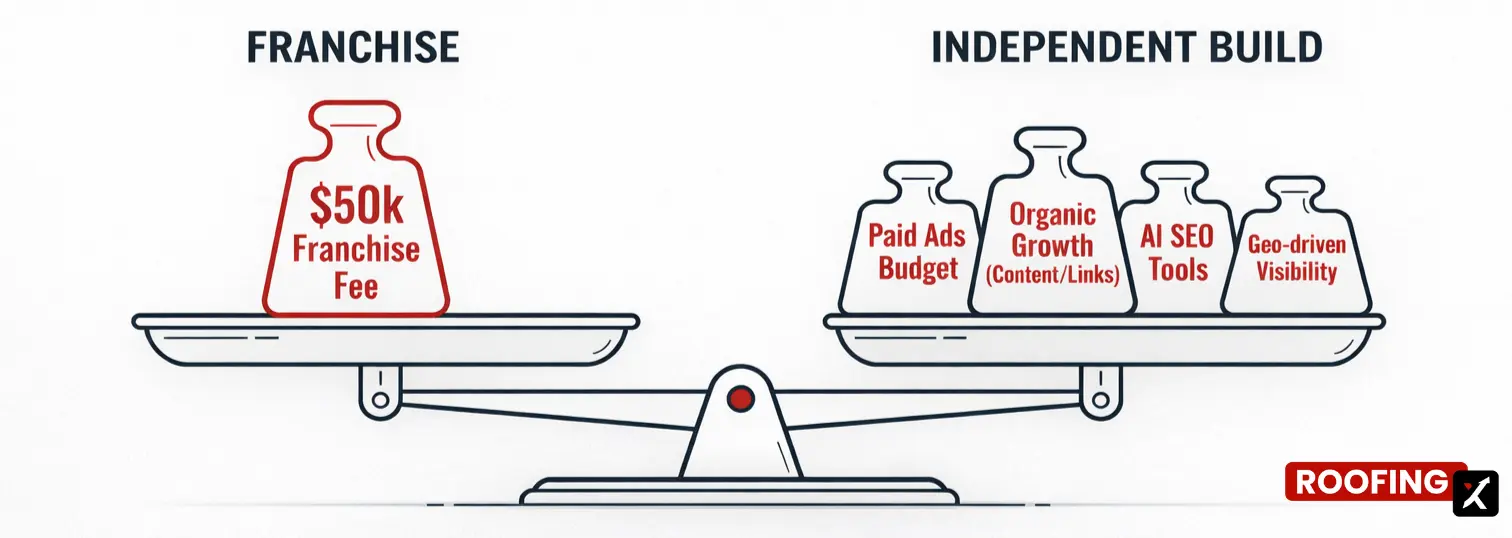
- Compare Systems to a Real Independent Setup: I’d ask a simple question: What could I build myself with the same budget? That includes paid ads, organic growth through link building for roofing contractors, and newer approaches like AI SEO for roofers and GEO-driven visibility. This comparison often changes how “valuable” the franchise looks.
This is also where an outside perspective helps. Insight from a roofing SEO agency helps spot inflated marketing claims and understand what actually drives leads versus what sounds good in a pitch.
Bottom Line: Is a Roofing Franchise the Right Move for You?
You now have the 5 best roofing franchise opportunities for 2026 in front of you. Whether you go forwards with any of them, or decide to be independent, depends on your preferences.
A roofing franchise makes sense if you want structure, speed, and a clear operating framework, and you’re okay giving up some flexibility to get there. It’s a poor fit if full control, custom decision-making, and owning every part of the brand long-term matter more to you.
Either way, one thing doesn’t change: you’ll need visibility. Customers still have to find you, trust you, and choose you. If you want support with that part, whether you franchise or go independent, contact us, and we’ll help you build the visibility your business actually needs.

.webp)